

 Folding boxes





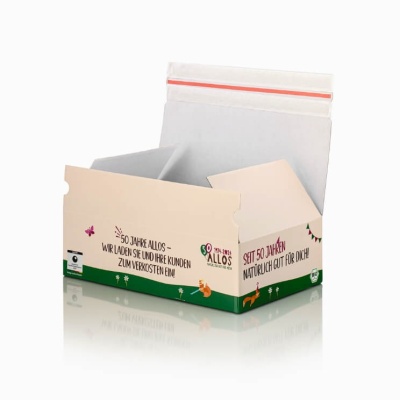 Shipping boxes





 Stand-up pouch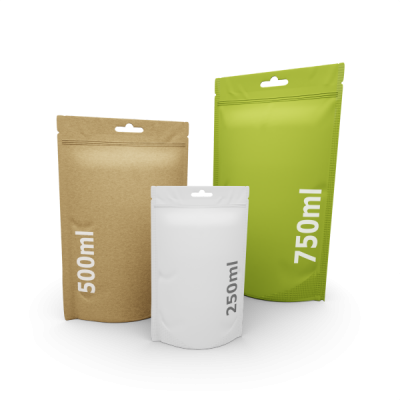



.png) Roll labels
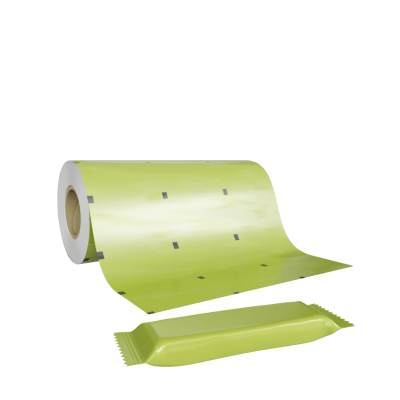
Roll labels 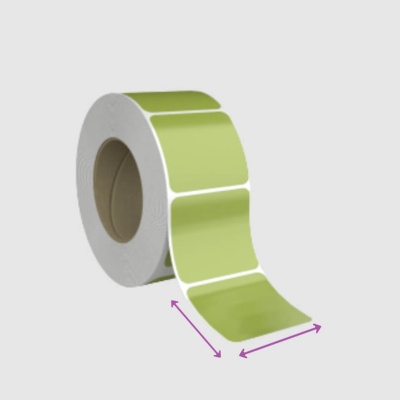


 Paper cans
  Sample boxes
 RECYCLING WITHOUT RESTRICTIONS
The good news right from the start: folding cartons can be recycled completely and without restrictions. Representative studies have shown this and it also corresponds to the claim that the European folding carton associations have already formulated in a joint position paper in 2019.
It is about how folding cartons can contribute to a comprehensive, functioning circular economy - and thus to greater sustainability overall. The Fachverband Faltschachtel-Industrie e.V. (FFI), the European Folding Carton Association (ECMA) and other national associations have outlined the requirements that folding boxes must meet against this background.
The special challenge: The practical packaging solution comes in many different variants to be able to protect a variety of products with very different requirements. Coatings, laminations, adhesives and embossing are important for the functional efficiency of folding boxes. However, they must not be an obstacle to their recycling.
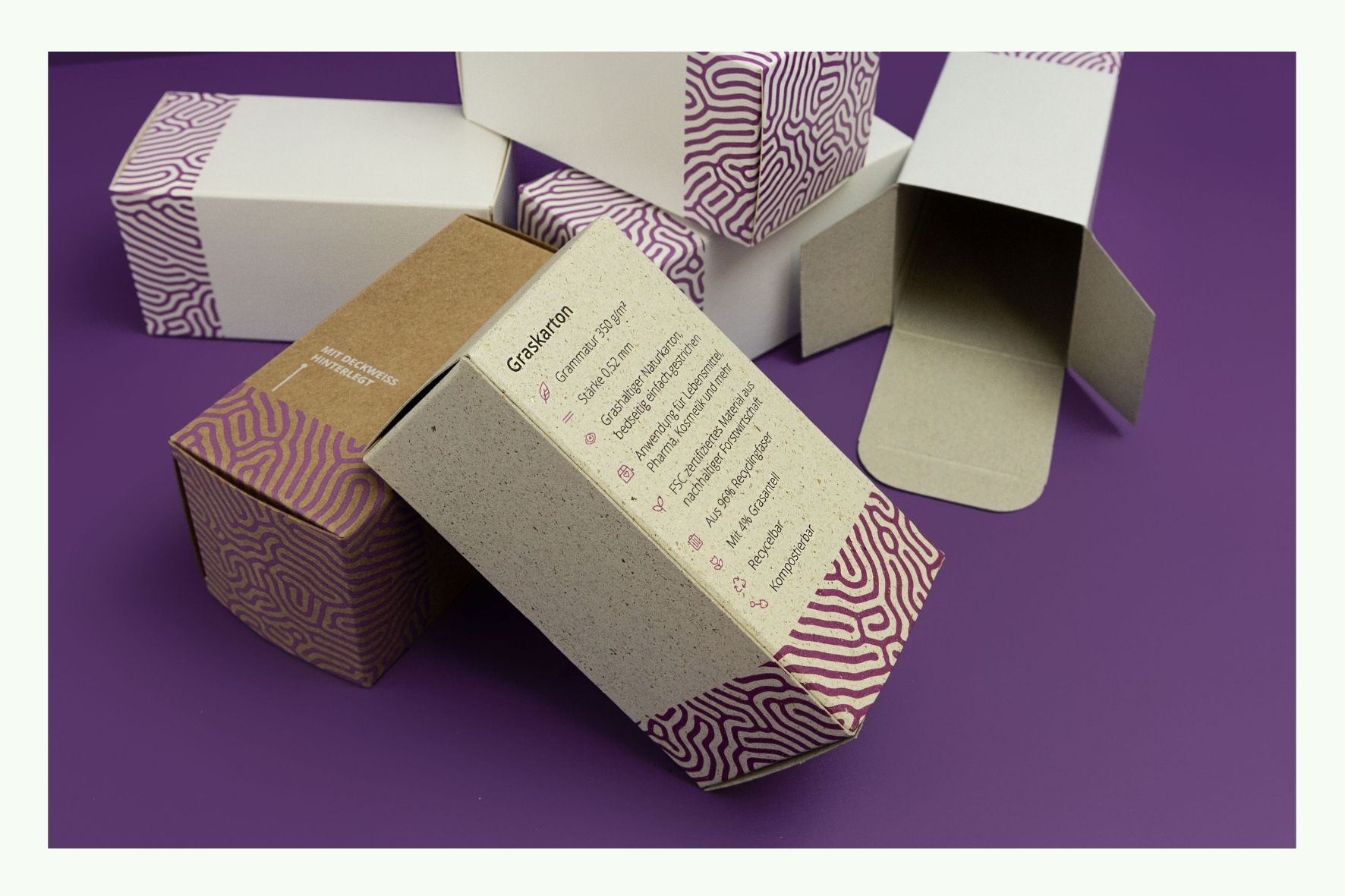

BEST CONDITIONS
Versatility has its price. In the case of folding boxes, for example, this means that the protective and barrier functions must be improved for certain products with "non-paper" agents. For effective barriers against oxygen, water vapor, migration, grease or other influences, the robust cardboard alone is often not enough.
In addition, folding boxes also fulfill representative tasks to promote sales in the retail trade. This requires a suitably high-quality and eye-catching presentation, which is often supported by foil embossing. Nevertheless, folding cartons are among the most sustainable packaging solutions. This is because experts confirm that even coated folding boxes have the best conditions for complete recycling - and there are several reasons for this.
MORE EDUCATIONAL WORK
It is not only the material properties of folding boxes that are essential for their good recyclability. Recyclable material cycles are also an important factor. Ideally, these supply sufficient recycled paper of high quality to be able to produce new folding boxes from it.
However, the handling of used folding boxes is not always in the spirit of this circular economy. The reasons for this are, for example:

- Composting instead of recycling: Composting instead of recycling: In principle, paper and cardboard waste can also be fully composted, and folding boxes are no exception. Because compostability is considered particularly sustainable, many cartons and boxes end up on compost heaps - and valuable fiber material for recycling is missing.
- Incorrect disposal: Coated folding boxes or those with viewing windows made of plastic easily cause uncertainty among consumers: How is such packaging actually disposed of correctly? Because of the plastic content, these boxes are often placed in the yellow bag for lightweight packaging. Fiber-based packaging such as folding boxes can still be separated from this. However, this is only possible with significant losses in quality, for example due to contamination.
In order to improve the recycling of folding boxes, consumer education is important. If packaging waste can be sorted better, the proportion of high-quality recyclates can be increased - another step towards a better circular economy with folding boxes.