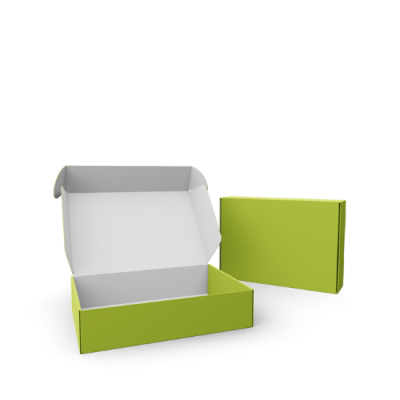
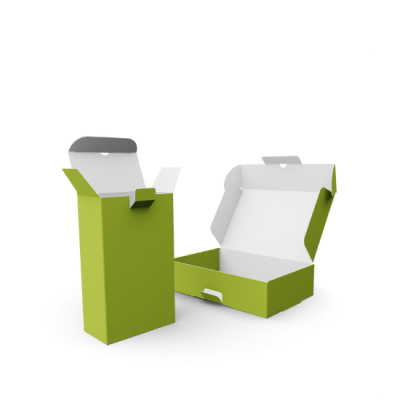
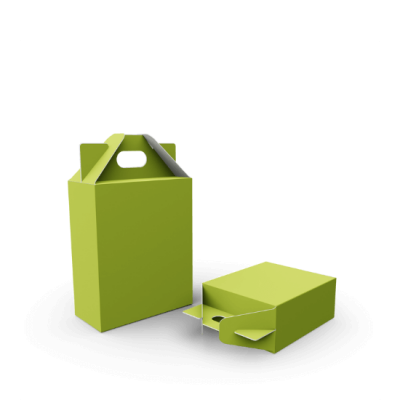
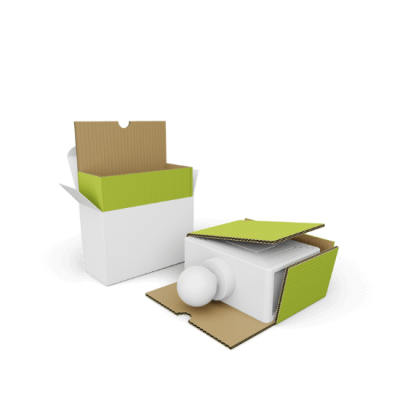
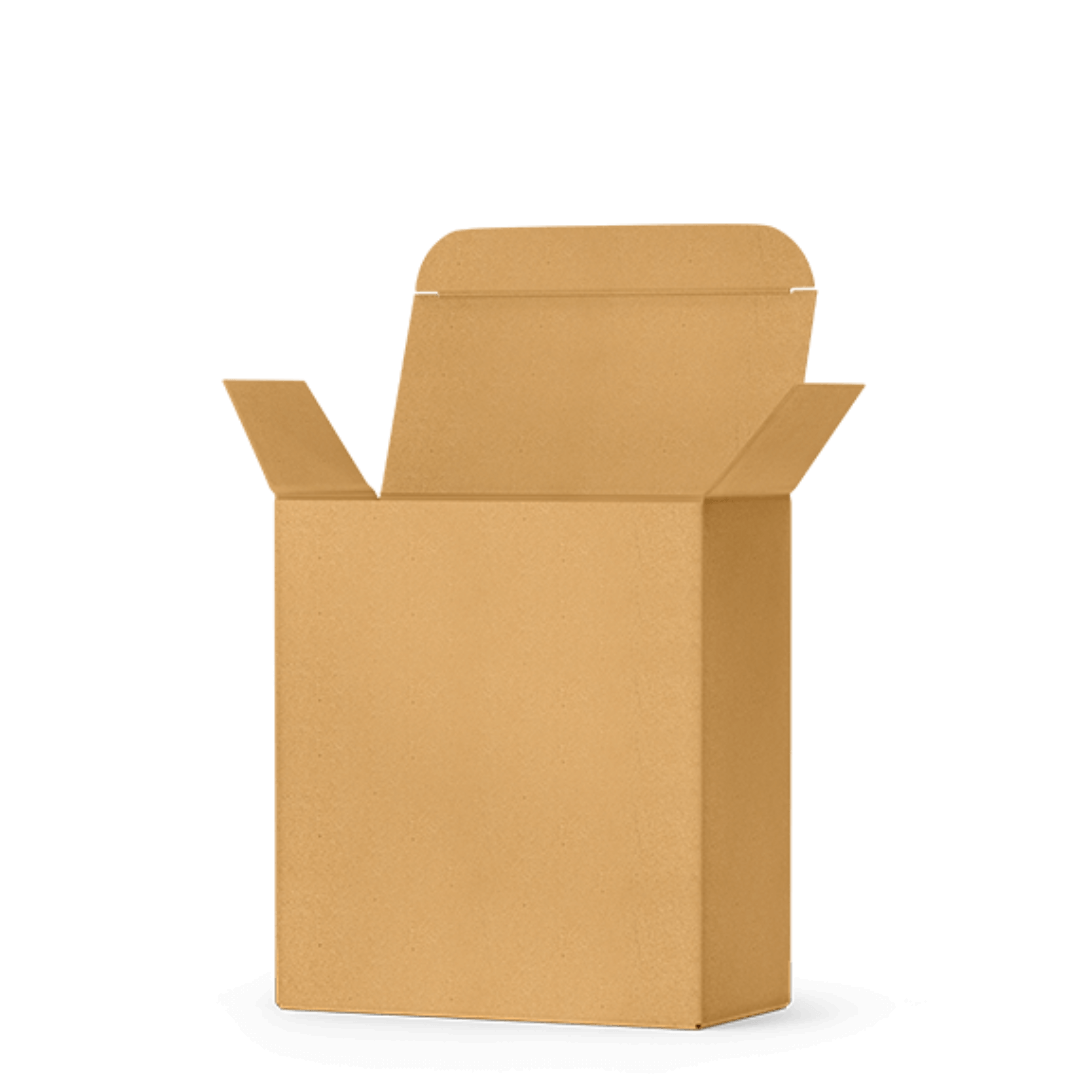
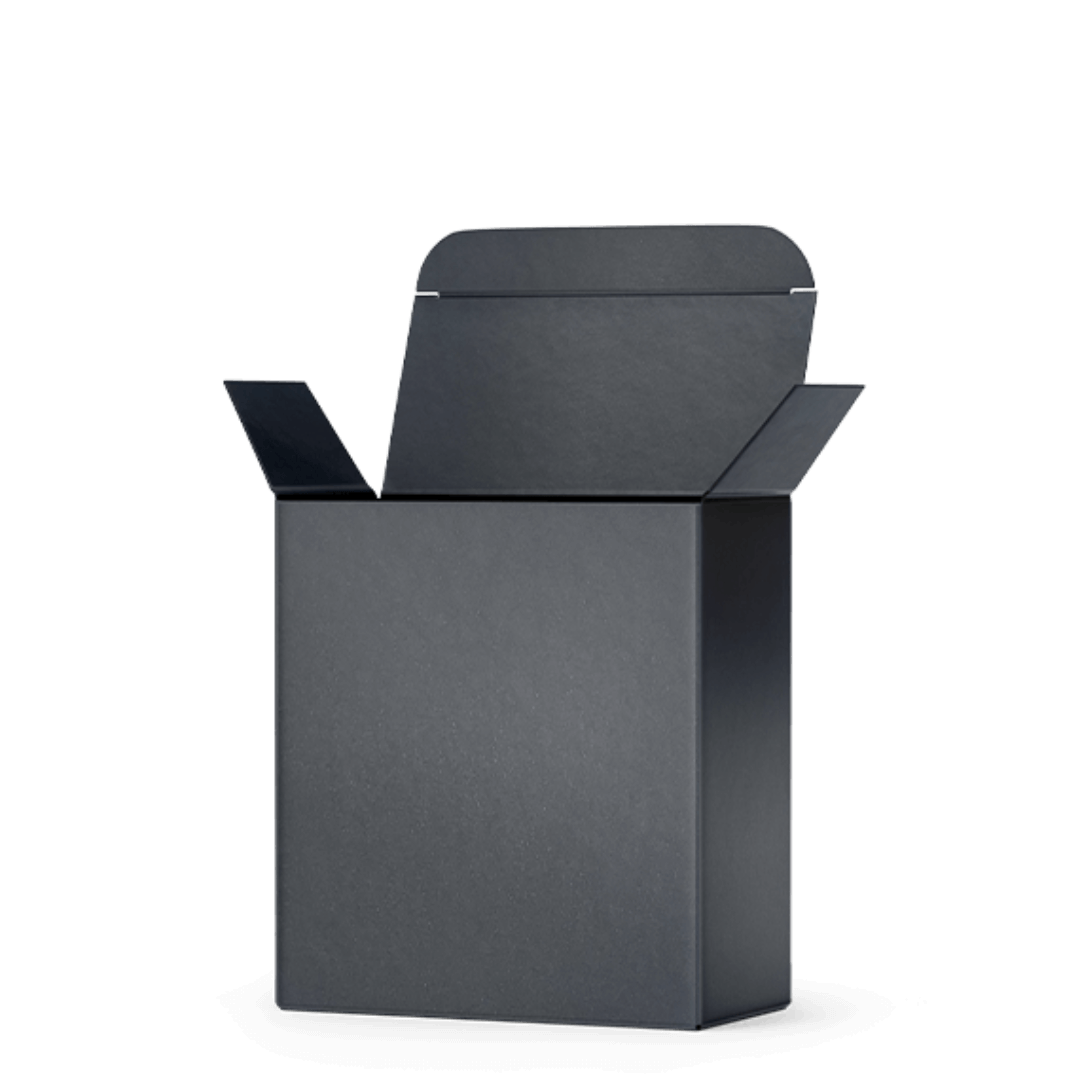
Get more out of your product packaging – with our high-quality, custom-made folding boxes, made in Germany! Whether cosmetics, medical products or food: our folding boxes impress with their high-quality manufacturing, perfect fit and brilliant digital or offset printing. Choose from numerous box types and customise the size, material and print – easily online. This will turn your packaging into a brand ambassador at the point of sale!
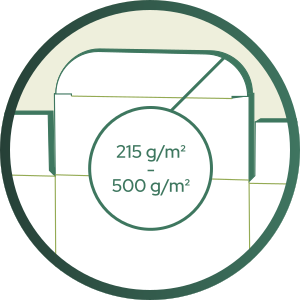
Our folding boxes are available in grammages ranging from 215 g/m² to 500 g/m². This means you can find the right material for every product – from lightweight to extra sturdy.
State-of-the-art printing technology
Our folding boxes are produced using digital or offset printing – for brilliant colours, razor-sharp details and packaging that perfectly showcases your brand.
Elegant surfaces
Give your folding boxes a sophisticated feel and high-quality appearance with matt, glossy or soft-touch foil laminate.
Special colours & Pantone
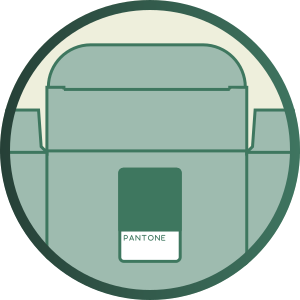
On request, we can print your folding boxes with special colours such as Pantone. This allows you to achieve consistent branding and strong brand recognition.
Window punching
Our folding boxes are available with window cut-outs on request – with or without window backing. This keeps your product visible and inspires additional confidence.
Hot foil stamping
Hot foil finishing gives your folding boxes an exclusive, premium look. Metallic effects attract attention and enhance your brand image.
Embossing and debossing
Our folding boxes can be finished with raised or recessed embossing. This creates tactile textures that enhance your design and create an exclusive brand image.
Recycling
Depending on the selection, our folding boxes are made from fresh or secondary fibres. All cardboard packaging is recyclable via waste paper, thus contributing to a sustainable material cycle.
Nils Harder CEO & folding box specialist
Your folding boxes are our passion!
Would you like to have your folding boxes professionally produced? Our team will personally assist you with all questions relating to design, materials, finishing and printing, and will work with you to find the right solution. We will reliably accompany you from the initial idea to the finished box and ensure that your product is perfectly protected and your brand is presented in a compelling manner. Feel free to get in touch – we look forward to hearing from you!
Are you looking for folding boxes that perfectly match your product? We'll take care of it – no matter whether small, large or particularly demanding. We have been producing customised packaging solutions in Germany for three generations, combining experience with modern printing and manufacturing technology. You get quality you can rely on and a team that thinks ahead. Together, we turn your idea into the perfect folding carton – functional, high-quality and distinctive.
We would be delighted if you could send us a message and give us an insight into your requirements. The more specific your information is, the better we can advise you and suggest a suitable solution.
We will get back to you as soon as possible!
Folding boxes directly FROM THE MANUFACTURER
Your partner for customised folding boxes
Folding boxes made in Germany
We value regionality and love for our homeland. That is why we produce your folding boxes in the heart of Germany.
Sustainable materials
We rely on sustainable and regional solid board that is recyclable, manufactured in a CO₂-saving manner and consists largely of recycled paper.
Personal contact person
You will always have a dedicated contact person who will advise you personally and accompany you from your enquiry to the delivery of your folding boxes.
Folding boxes are product packaging made of cardboard, whose properties meet all the requirements of modern packaging. In addition to conveying information, they also impress with their functionality, stackability, flexible packaging sizes and sustainability. They protect products during transport and can be delivered and stored in a space-saving manner before being assembled and filled.
With a choice of different types of cardboard, finishes and designs, cardboard sales packaging is indispensable for brand image and supports product branding. The wide selection of folding box types, shapes and materials, as well as the diverse design options, make folding boxes a universally applicable form of packaging that is used in almost every industry.
Folding boxes – versatile packaging for your products!
Folding boxes fulfil many tasks: they provide good protection for products, simplify transport and ensure the quality of goods. The packaging looks high-quality, conveys a sense of security and is easy to open and reseal. In addition, creatively designed folding boxes offer great advertising potential – thanks to their excellent printability, information on folding boxes is particularly visually appealing. They convey product features and values like no other packaging and form a representative unit with the product at the POS as well as in online retail.
A folding box must have many characteristics in order to succeed in retail and online sales:
Attractive brand design
Attractive brand design
Product protection
Quality assurance
Equipment with barcodes, labels, etc.
Standard dimensions for shelves and transport
Safe handling
Recyclability
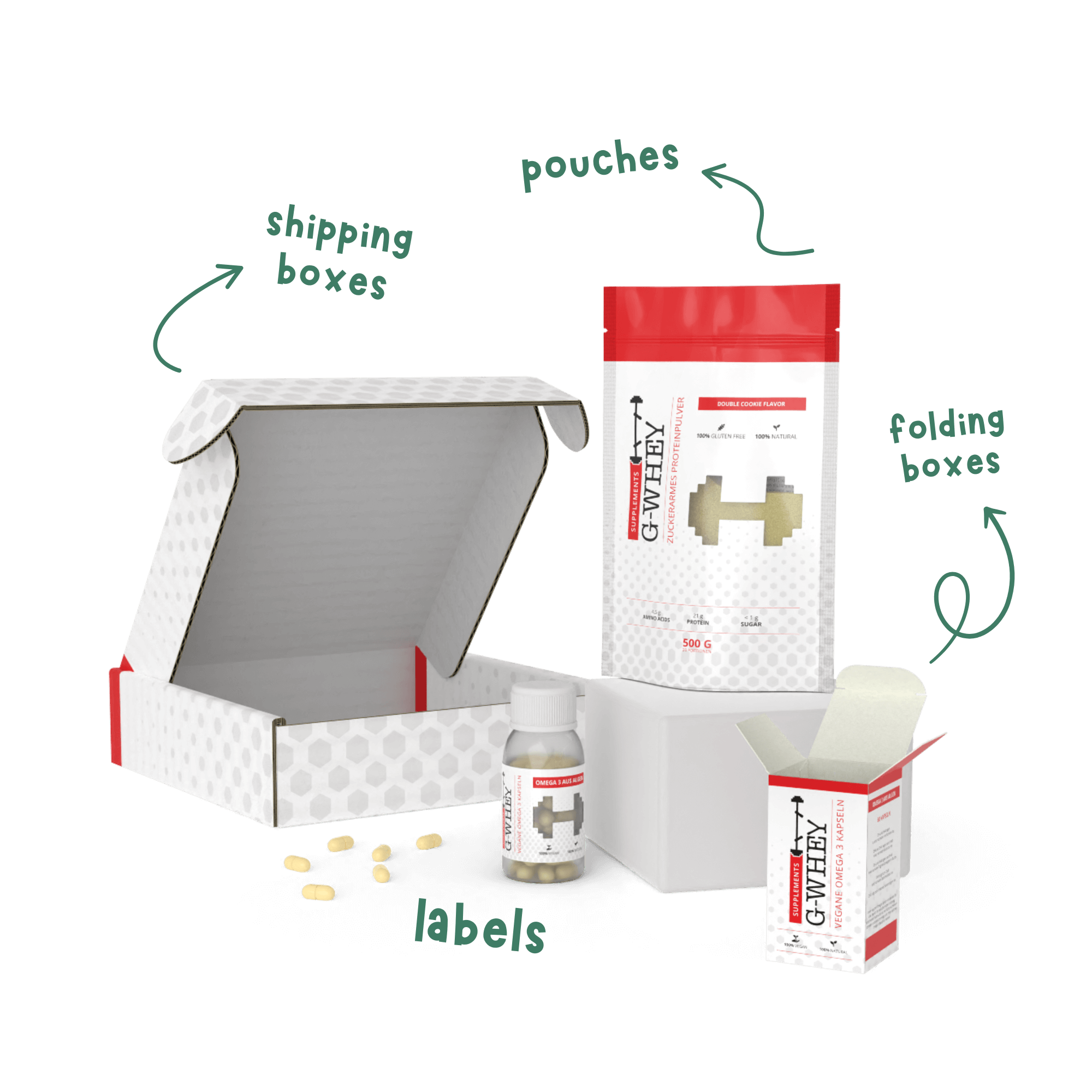
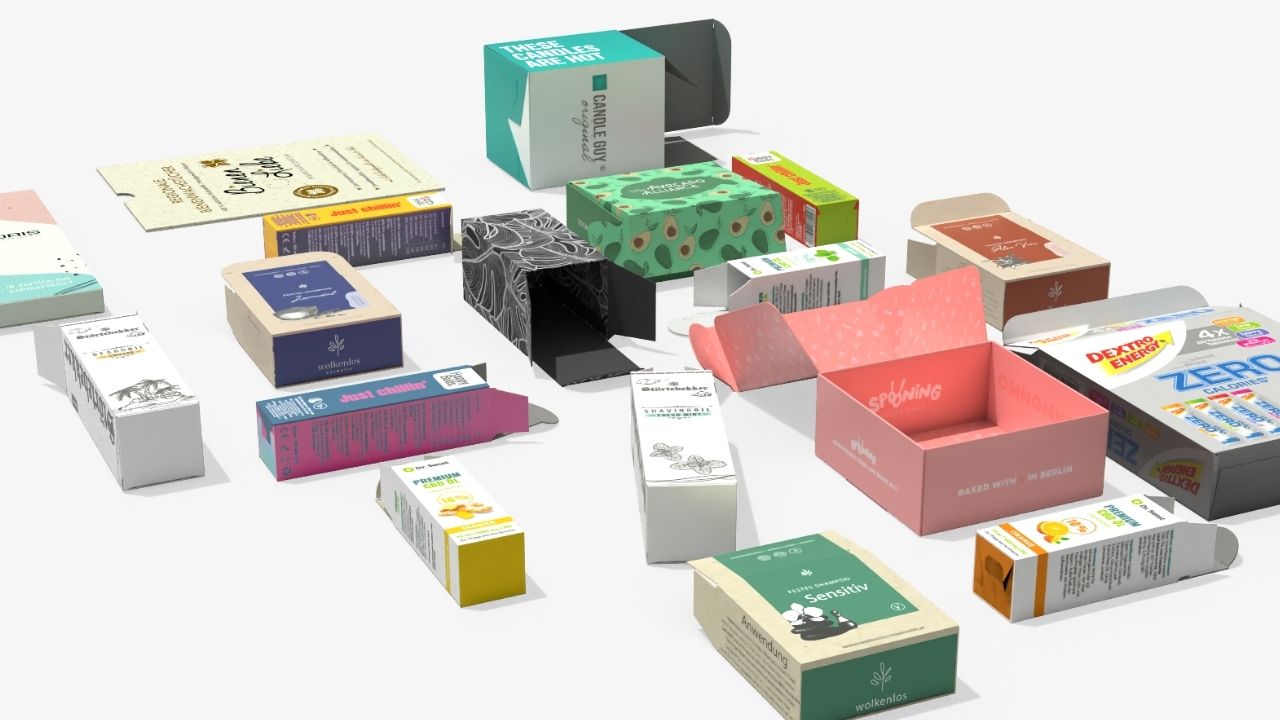
At packaging warehouse, you will find folding boxes that can be tailored precisely to your products thanks to the materials used and the different variants available. Whether you need a folding box with hinged lid, Gable boxes, counter displays and carry-handle boxes, or cardboard sheets, inlays and pillow boxes – whether you need security flaps, insert flaps, tuck-in bottoms or automatic bottoms. We have the right folding boxes for you and your products.
The construction of folding box cartons
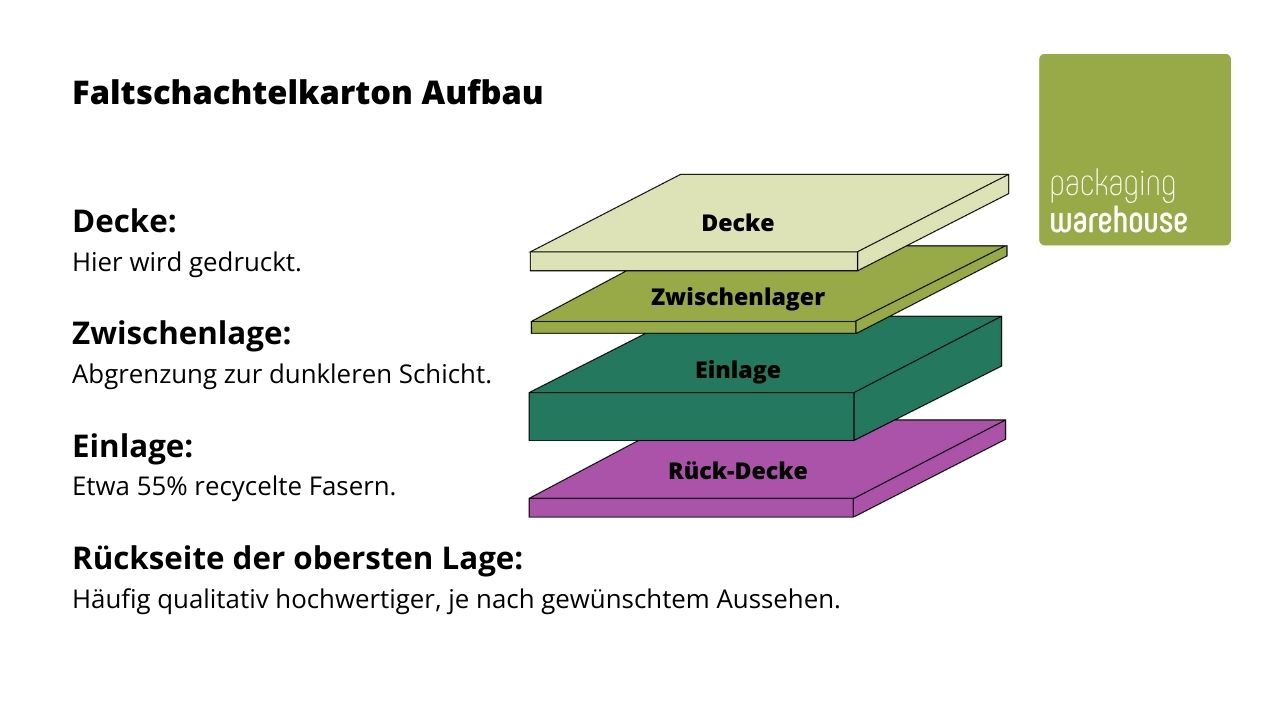
The material forms the basis for the properties and associated versatility of cardboard packaging. Cardboard types that are suitable for the production of folding boxes are referred to as ‘folding carton board’ – in most cases with a basis weight (grammage) of around 150 g/m² to 600 g/m². The cardboard consists of several layers of fibre material made from fresh fibres from cellulose pulp or recycled fibres:
Top side (top layer of the box)
Interlayer + insert (one or more fibre layers)
Back (back cover of the box)
It is not individual aspects of the fibres used that are decisive for the quality of the cardboard, but rather a balanced ratio of all materials. The structure with several fibre layers gives the cardboard excellent quality and optimum running properties in the printing, finishing and refinement processes. This is based on the general properties of wood fibres:
The fibres interlock and combine to form a strong, homogeneous structure
Thanks to their flexibility, shape and dimensions, fibres can form a uniform mesh
During the manufacturing process, the properties of the fibres can be positively altered
The multi-layer structure allows the properties of the fibres in the individual layers to be optimised so that the cardboard can perform specific tasks. This is made possible by the different composition of the individual layers, which is achieved, among other things, by varying the proportion of long and short fibres in each layer.
Folding boxboard is divided into the following classes, which differ primarily in terms of the fibres used and the surface treatment:
Name
Primary fibre cardboard (fresh fibre cardboard)
Secondary fibre cardboard (recycled cardboard)
Cast-coated cardboard
Top layer
Primary fibres
Primary fibres / Recycled fibres
Primary fibres
Interlayer
Primary fibres
Recycled fibres
Primary fibres
Reverse side
Primary fibres
Recycled fibres / Primary fibres
Primary fibres
Fibres
bleached / unbleached
bleached / unbleached
bleached / unbleached
Surfaces
pigmented / painted
coated
Top surface painted high gloss
INFO: The production of paper has historical roots that can be traced back to various cultures. The term ‘paper’ is derived from ‘papyrus’ and made it possible to record knowledge on easily transportable material. Early writing materials were stone and clay, but the invention of paper greatly simplified the transmission of information.
Folding boxes in any size
At packaging warehouse, we manufacture your folding boxes from the following types of cardboard:
Chrome board
Recycled cardboard
Cellulose cardboard
Natural cardboard (light brown/black)
Grass cardboard
They are suitable for a wide range of products, including folding boxes with tuck-in flaps, folding box with hinged lid, counter displays and cardboard slipcases. You don't have to settle for standard formats when it comes to the dimensions of your folding box – with us, you can freely determine the size of your folding box and have it cut to fit your products exactly. The values for length, width and height always refer to the internal dimensions of the boxes and range from 15 x 8 x 25 mm to 300 x 198 x 420 mm. Depending on the size you choose, different material thicknesses are available. This ensures the right stability for the size and weight of your product.
There are two ways to select the shape of your folding box:
You select your cardboard product directly on our website
You send us the ECMA code of your desired packaging
The ECMA codes provide an overview of various shapes for die-cut packaging and foldable cardboard boxes. In addition to packaging manufacturers in Europe, the codes are now also used by many companies in North America and on other continents.
As we do not have a minimum order quantity, you can order folding boxes from us starting from just one piece. With express production, we can manufacture your folding boxes within three working days – meaning your order will be with you in five working days at the latest!
In addition to the wide selection of folding box types available at packaging-warehouse.com, we can offer any other folding box shape to suit your individual needs. My team of packaging specialists and I are always available to assist you. Together, we plan and sample individual folding box projects and produce them at the best possible price-performance ratio. Simply contact us by phone or email – we will be happy to advise you on your personal folding carton project!
Lasse Harder CEO packaging warehouse
All our folding boxes can be printed over the entire surface. This means you can have the outside and inside of your folding box printed – from single-colour logos to elaborate designs in CMYK or even Pantone special colours. Digital printing is selected as the default option in our configurator, allowing even small print runs to be printed cost-effectively. However, offset printing is also available for large order quantities. Our intelligent configurator calculates the best price without obligation and automatically selects the right printing process – for fast production in top quality.
INFO: At packaging warehouse, we are already planning the next feature – with our online designer, you will soon be able to design your folding boxes even faster, even better and even more individually directly on our website.
The folding box and its functions
Despite its versatility, the folding carton is and remains a product packaging – it protects goods from external influences and is indispensable for efficient transport. In addition, American cardboard boxes have enormous marketing potential – their visual and haptic qualities are indispensable for brand image, customer loyalty and sales success. In the retail sector in particular, attractively designed folding boxes are often decisive in the purchase of a product. And with a high recycling rate of 80%, cardboard folding boxes are comparatively sustainable packaging – especially since cardboard fibres can be recycled multiple times.
Folding boxes thus offer a whole range of advantages, as they combine various tasks and areas:
Presentation of the brand and product on the shelf or in the online shop
Individual design as a distinguishing feature from competing products
Signals the value of a product
Product protection and quality assurance
Appealing presentation area – even for smaller products
Tamper-proofing / originality protection for e.g. food or expensive cosmetics
Possibility of combining products within one package
Contribution to the sustainability of a product
As an essential component of a product, folding boxes are largely responsible for brand perception and image.
Marketing with folding boxes
It is no secret that attractive packaging can be an incentive for consumers to buy, from a product marketing perspective – but a folding box has many other functions that are crucial for successful marketing. This is because folding boxes
Attract attention
Stand for innovation and quality
Assisting with brand communication
Enable a multisensory customer experience
Signal authenticity and value, and
Easy to use.
In order to exploit the full potential of folding cartons in marketing, the product and packaging must act as a single unit. Poorly made or even missing packaging can, in the worst case, give the impression that the customer is looking at an inferior product. A strong brand and successful, informative packaging design are therefore inextricably linked.
In order to exploit the full potential of folding cartons in marketing, the product and packaging must act as a single unit. Poorly made or even missing packaging can, in the worst case, give the impression that the customer is looking at an inferior product. A strong brand and successful, informative packaging design are therefore inextricably linked.
With their excellent printability and high functionality, folding boxes in particular are packaging with high advertising potential – as an effective communication medium that attracts the attention of the target group and has direct customer contact. Successful aesthetics and creative design ensure better perception and, in the best case, increase the willingness to pay a higher price for a product with attractive packaging.
Even after purchase, folding boxes often remain in use at home, thereby strengthening the relationship between the brand and the consumer. Sustainability also plays a role here: cardboard, as a material made from renewable raw materials with good recycling properties, is considered environmentally friendly by consumers of all ages.
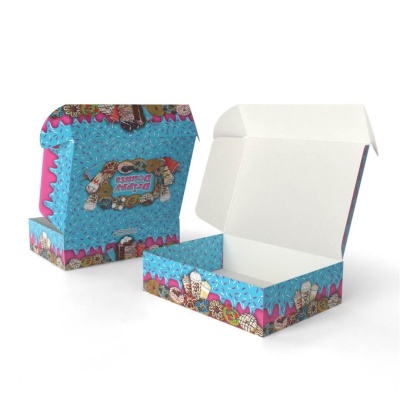
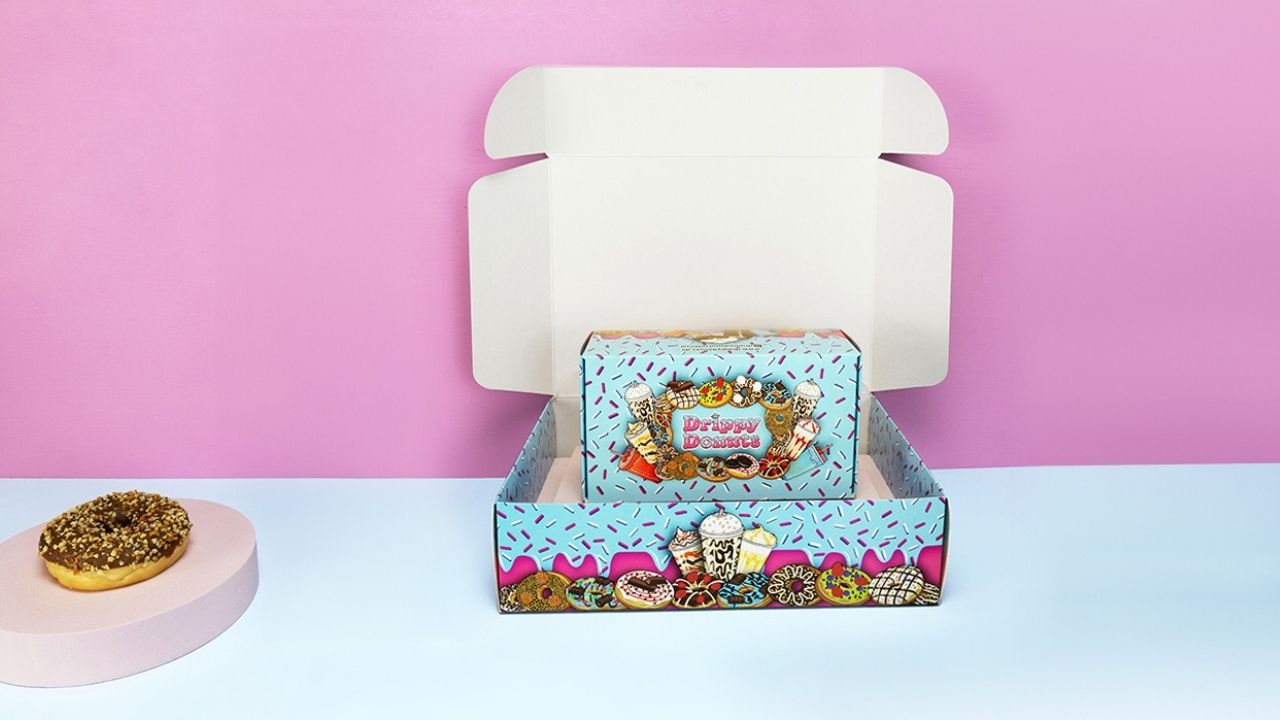
Info: Folding lid boxes are a popular type of folding box. The lid folds up, making them ideal for packaging gifts or marketing materials, and they can be designed with an attractive look both inside and out.
One box – many possibilities
In addition to their classic role as product packaging, folding boxes can also perform other representative tasks in retail. These include, for example, counter displays that combine two functions: as collective packaging for smaller goods such as snacks, teas or cosmetics, the boxes are reliable packaging – at the same time, when opened, they form an advertising space that attracts customers' attention directly at the point of sale. You can also have your Counter display attractively designed by us – e.g. with full-surface printing and finishing – to make the best possible impression in stores.
At the same time, folding boxes offer excellent protection as secondary packaging, which can be further enhanced with matching cardboard inserts. The cardboard inserts give the packaging additional stability and, with their precisely fitting cut-outs, are ideal for the safe storage of sensitive goods such as ampoules, jars or even chocolates. At packaging warehouse, you can of course also have your inlay printed, which, especially in combination with a folding box with hinged lid or Telescope boxes, provides a large presentation area.
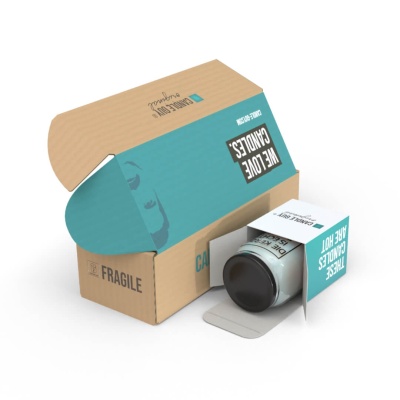
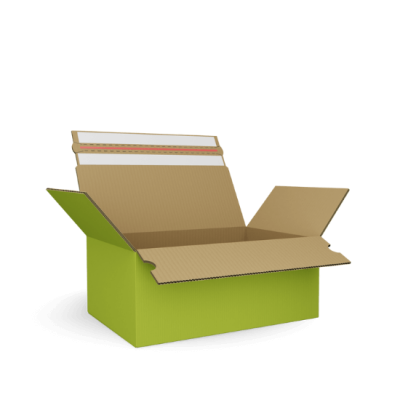
Folding boxes also ensure secure product protection as shipping packaging – from smaller and lighter items to books, folding boxes are suitable for shipping products. At packaging warehouse, you can order the specific dimensions for your product and shipping packaging – this allows you to determine the size of your folding box and adapt it precisely to your product. This also makes it possible to create packaging that not only provides excellent product protection but can also be posted through a letterbox.
But the folding boxes themselves are also ideal for shipping and storage – they are glued together after manufacture and packed flat, so they can be shipped and stored in a space- and resource-saving manner. They only reach their final shape when they are unfolded for filling.
Info: Folding boxes are also suitable for shipping as maxi letters and large letters – corrugated cardboard packaging is not always necessary, especially for items with a low shipping weight. Cardboard folding boxes are often the right choice, particularly for sending books and goods.
Our types of folding boxes
At packaging warehouse, you can choose from many box shapes and types of cardboard to configure your box type. The different types are suitable for many product types and applications – so you should clarify all questions regarding weight, size, sensitivity, etc. in advance to find the optimal packaging for your product. For more information on choosing the right box types, materials and box bases for your product, see our magazine article ‘Which box for my product?’.
Folding box with tuck-in flap
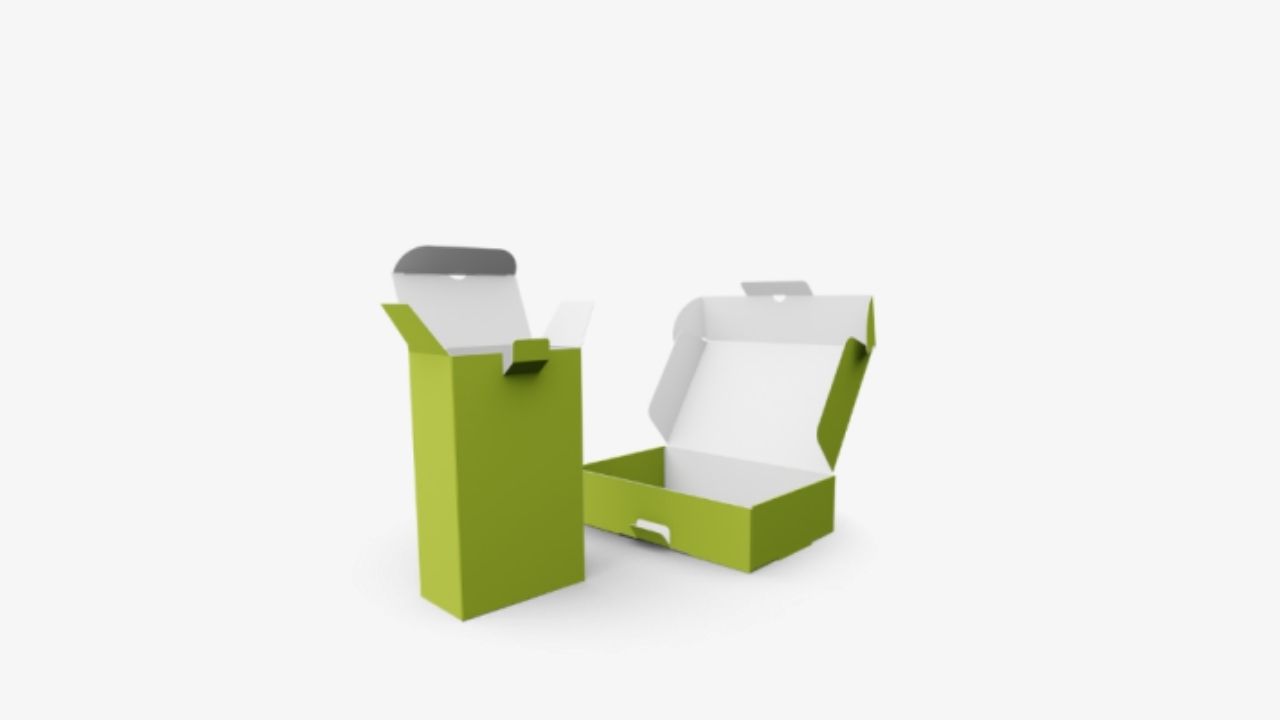
The classic in our range impresses with its simple design and excellent value for money – it's no surprise that Folding boxes with tuck-in flaps are our top sellers. Available with offset and opposite flaps – mirrored or parallel. The side dust flaps prevent dust or foreign objects from entering the packaging and also act as a locking mechanism for the tuck-in flap.
Hinged box
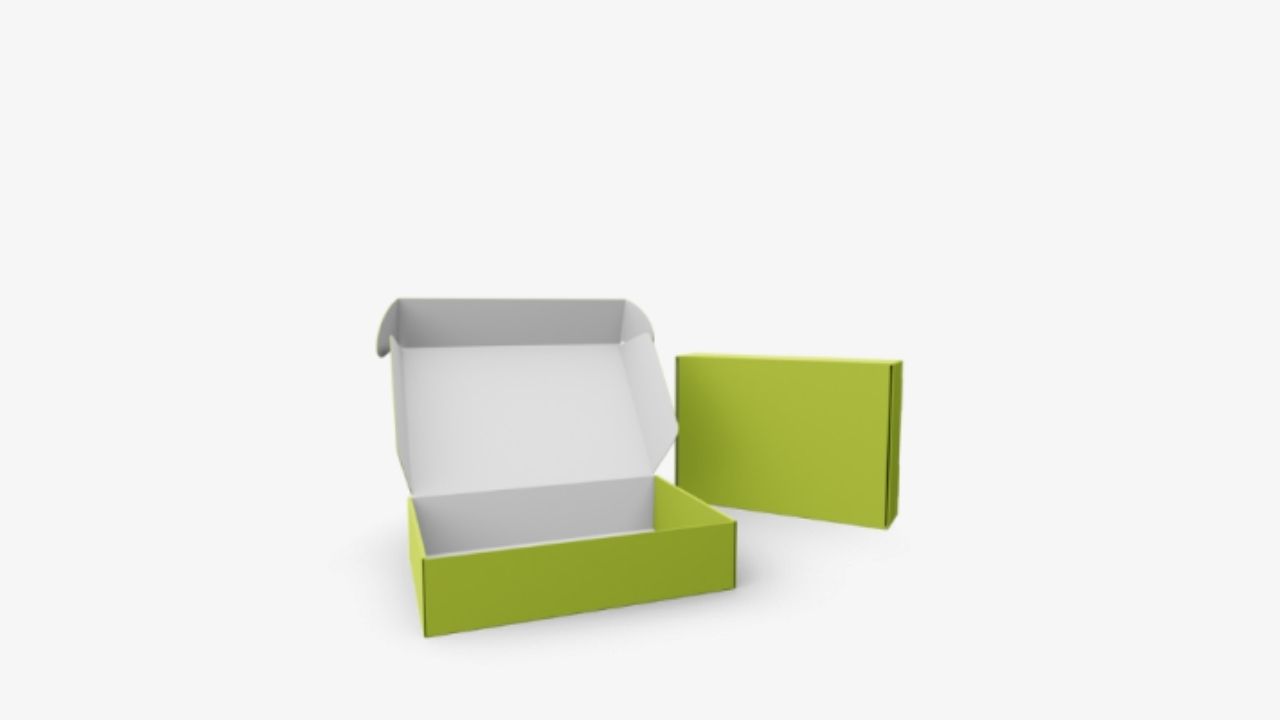
The tuck-in flaps on the hinged lid make it particularly easy and secure to close. This makes the box ideal as simple outer packaging, fully printed product packaging or refined gift packaging for cosmetics, books and many other products. Not only are they well protected in the folding box with hinged lid, they also convey important information and ensure appropriate product presentation. The hinged box does not require any adhesive and gets its stability from the double side walls, which are simply turned over during assembly.
Folding boxes with security flap
Type your text
With their additional closure on the upper tuck-in flap, folding boxes with security tabs offer additional protection for the packaged products. The counter-lock is achieved by means of a tab (locking tongue) on the top of the folding box, which is inserted into a pre-punched slot in the insert tab when closing. This ensures that the box is closed particularly securely, but also makes it somewhat more difficult to open – which, from an unboxing perspective, can also enhance the experience and perceived value.
Counter display
On the one hand, this folding box protects the items it contains, and on the other hand, it gives them an eye-catching appearance. When closed, a counter display is a space-saving form of packaging; when opened, it attracts attention thanks to additional advertising space. Ideal for shop counters, checkout areas or sales shelves – thanks to the fold-up closure flap, which becomes the back wall of the display, your products will be an eye-catcher at the POS.
Inlay / Cardboard insert
Folding boxes are sturdy product packaging – but in certain cases, the packaged goods need additional protection. With an inlay / cardboard insert from packaging warehouse, the contents are securely fixed in place and cannot slip during transport. In addition to providing extra security, inlays can also enhance the appearance of packaging: precisely fitting cardboard inserts are used to secure products in gift sets, which are optimally presented through a window cut-out in the folding carton.
Gable boxes
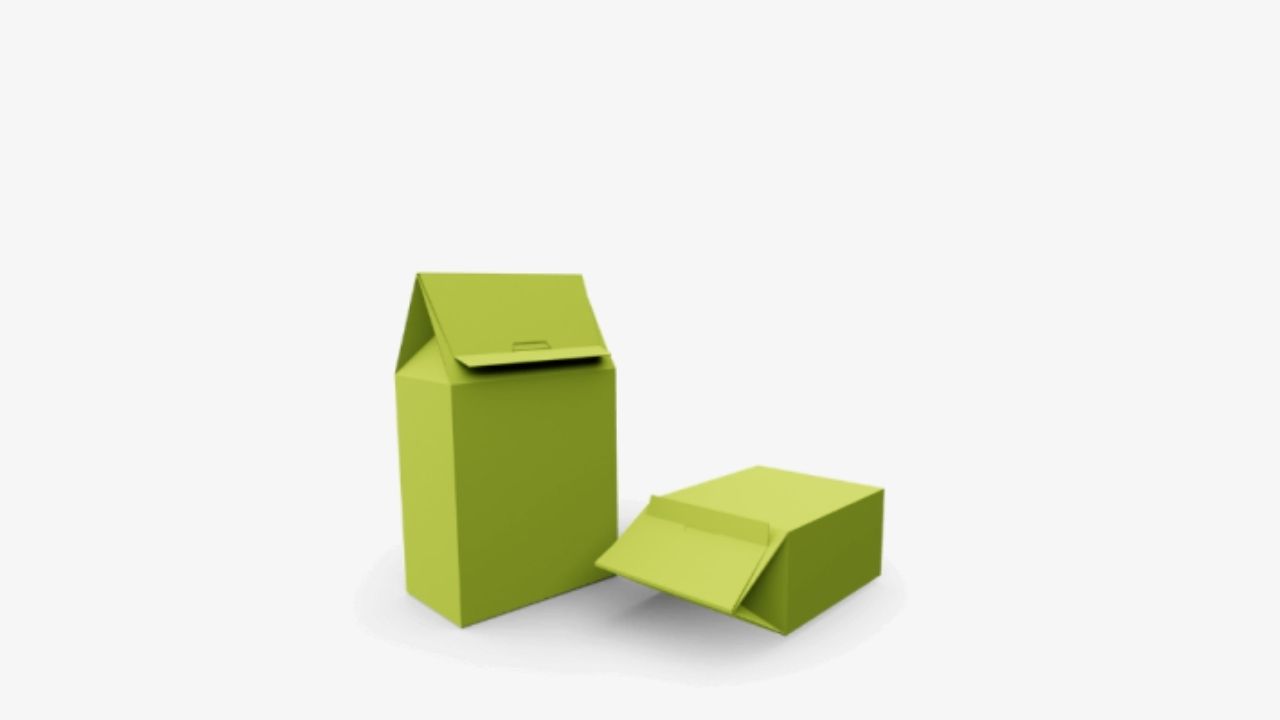
The Gable box owes its name to the pointed closure at the top, which provides additional stability to the resealable box. Its shape makes it particularly suitable for products that must not be crushed, but it is also a popular gift packaging for teas, spices, chocolate and other loose products such as jewellery, socks or T-shirts.
Folding boxes with Euro hole suspension
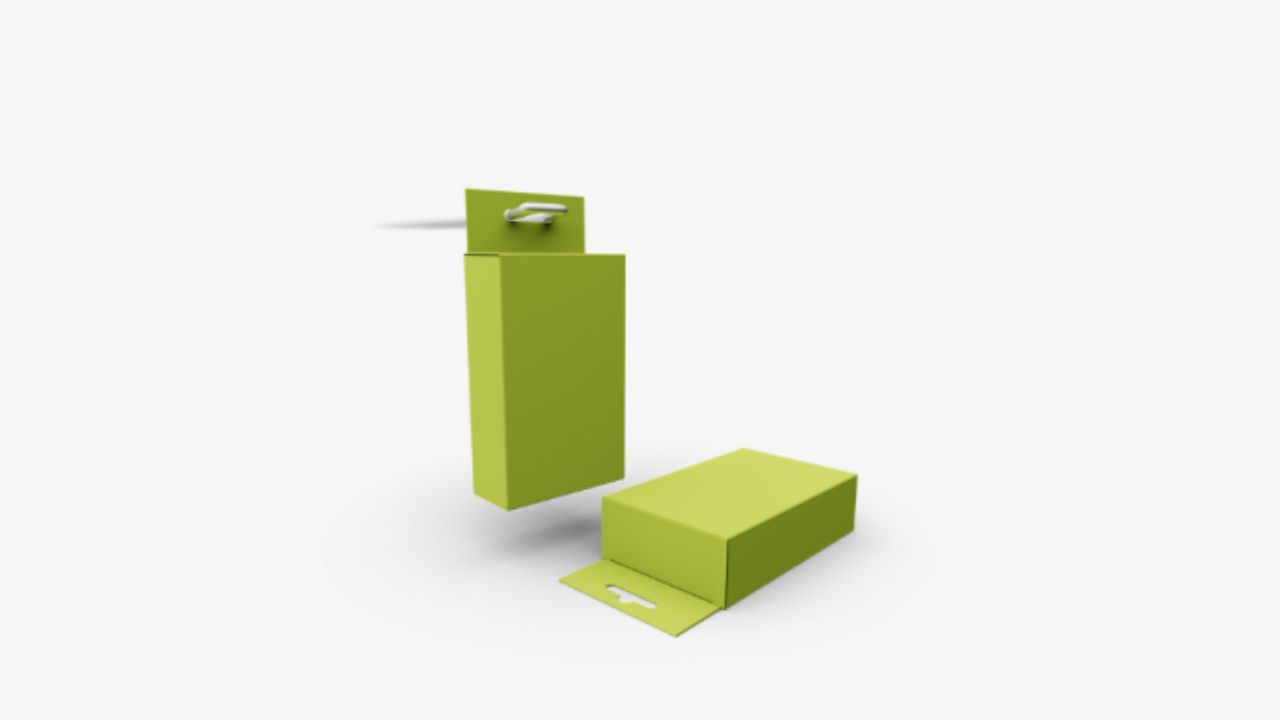
The standardised Euro hole in the upper tuck-in flap makes the folding box with Euro hole hanging the ideal packaging for the point of sale. With three base types (tuck-in flap, tuck-in base, automatic base), it is suitable for light to heavy products. Alternatively, packaging warehouse offers Euro slot hangers that are suitable for gift cards, for example.
Carry handle box
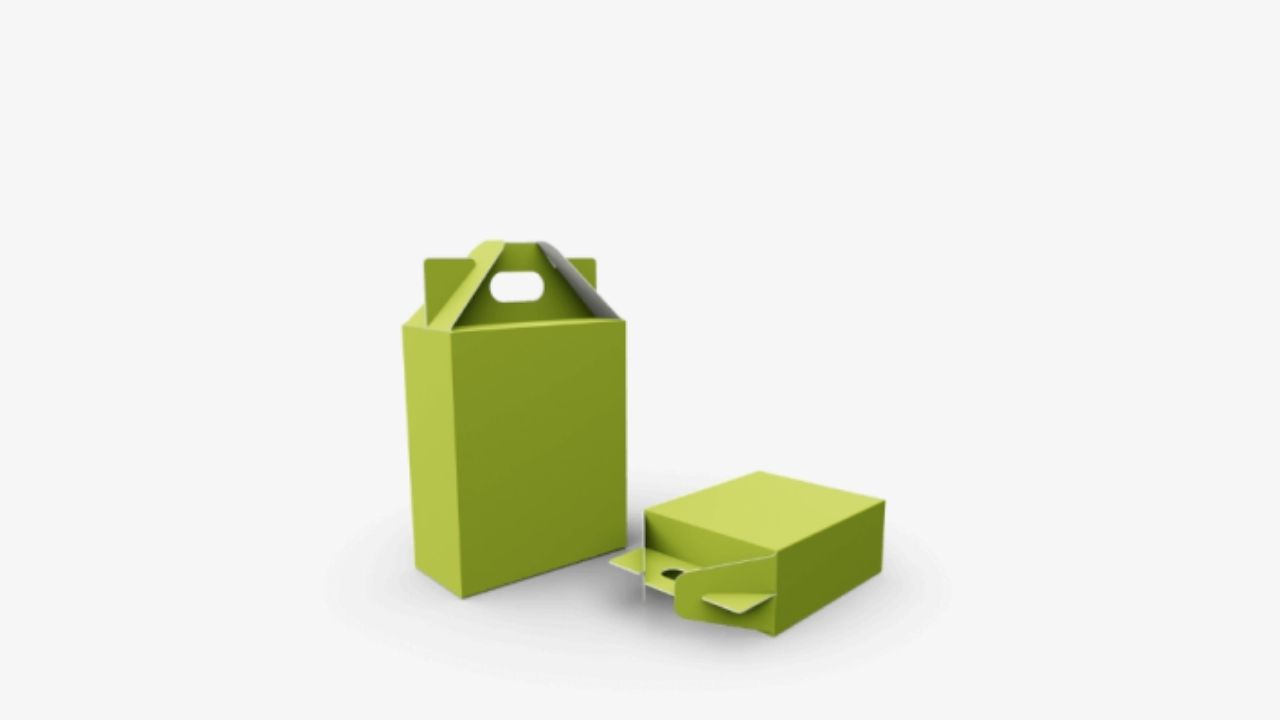
The carry handle box is a suitcase-style folding box with a handle that is assembled from the front and back of the box and secured by side tabs. The resealable packaging is mainly used for information material and brochures, e.g. at trade fairs. The sturdy packaging is stable and quick to assemble, which also makes it suitable for use directly at the POS.
Pillow box
The pillow box is an elegant packaging solution for compact products, from soap to jewellery. The pillow box impresses not only with its versatile design options, but also with its extravagant convex shape. This makes the box not only very stable, but also offers a high level of protection with minimal material usage and low weight.
In addition to the folding box variants mentioned above, you can also order folding boxes with separators, slipcases, Euro slot hanger and flat cardboard sleeves without fastener from packaging warehouse. Of course, you also have all the options for configuring your product with these types of packaging – the various types are printable and can be produced with all available cardboard types and options.
This is exclusive to us! You can create your folding box template (or print template/die-cut template) in open format with all the details online and receive it free of charge by email within a few minutes. Please note that the templates are optimised for our materials and processing methods. Lasse Harder CEO packaging warehouse
The base types of our folding boxes
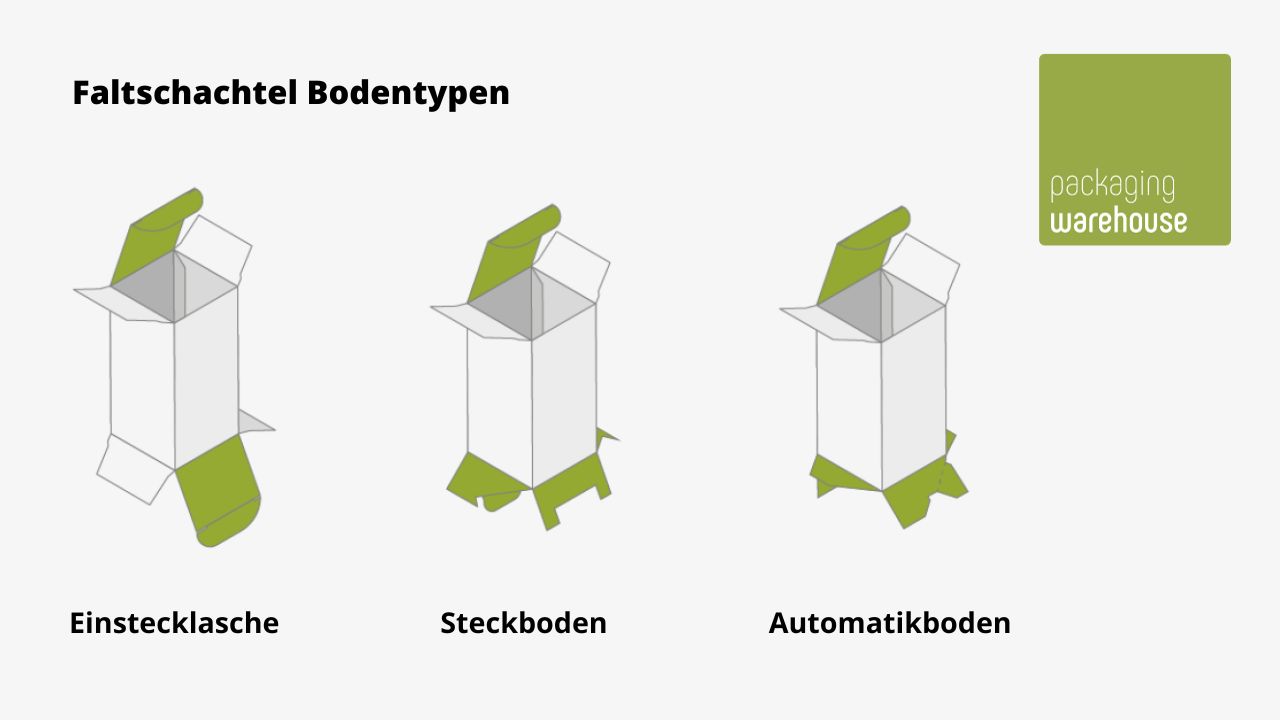
While the top of a folding box is usually closed with an insert flap, there are several options for the bottom of a folding box. The main factors to consider here are the load-bearing capacity of the design, the packaging, reliability, time savings, costs and handling. At packaging warehouse, you are sure to find the right option for your product. You can order the following types of bottoms from us:
Folding boxes with tuck-in flaps
Folding box with snap lock base
Folding box with crash lock base
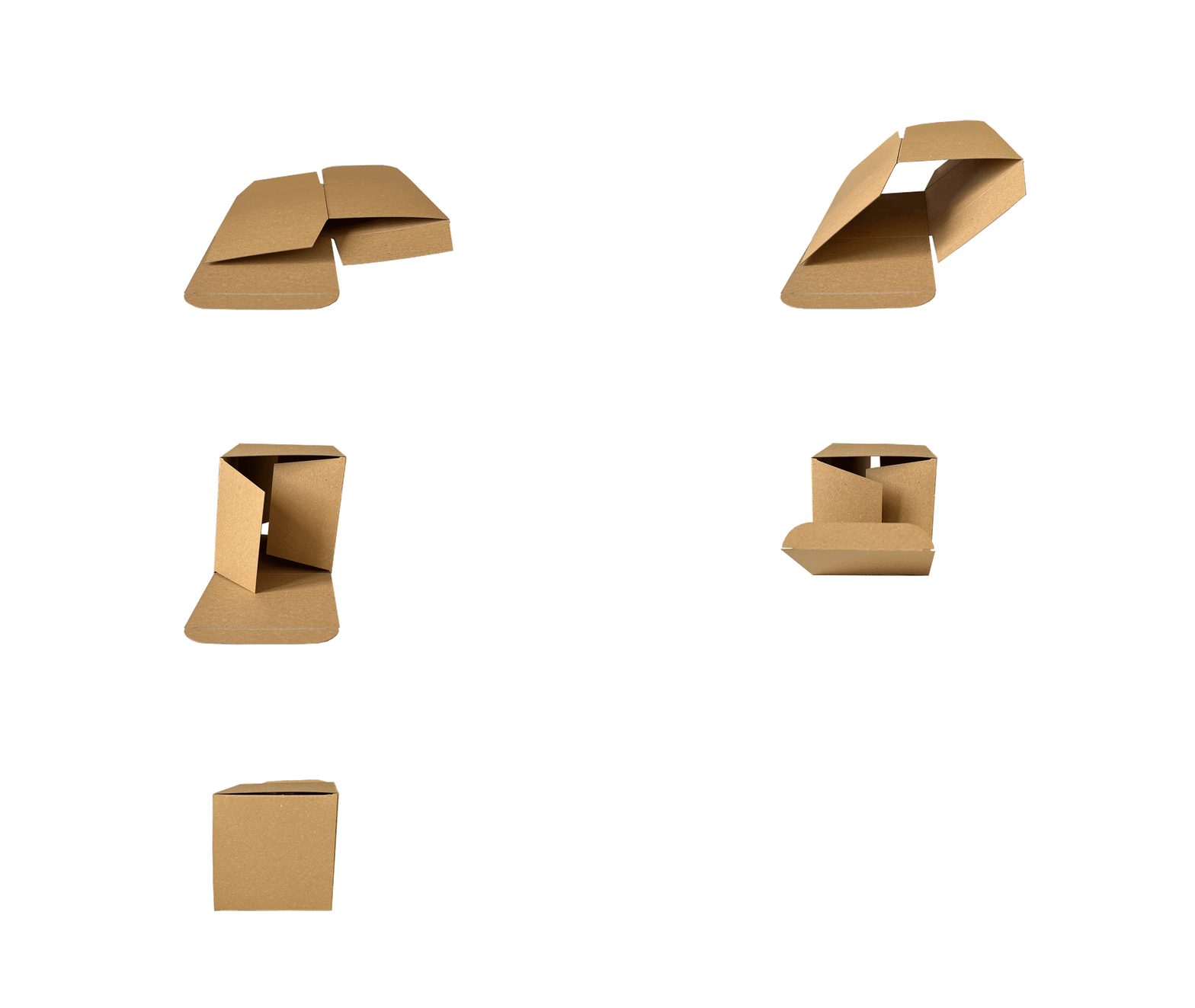
Tuck-in flap
Folding boxes with tuck-in flaps are rectangular or square boxes that are glued on the side and where the lid and base are closed with a tuck-in flap – a protruding part of the box. This makes it easy to close the boxes without the need for aids such as glue or adhesive tape. Even though the tuck-in flap securely closes the box, the folding box may open again during transport or storage. There are three different types of tuck-in flaps:
With the locking closure, the cardboard is cut into on both sides at the edge between the lid and the flap, so that the flap is locked by the dust flaps when closed.
The locking tab is an additional small tab located opposite the actual insertion tab. It is inserted into a slot between the lid and the insertion tab, thereby sealing the box very securely.
The insert tab with side flaps consists of two tabs on the box that are inserted into the side slots of the packaging when closing, thus securing the hinged lid.
Another advantage of boxes with tuck-in flaps is that the box closure is already integrated. This means that boxes with tuck-in flaps can be opened and closed again and again.
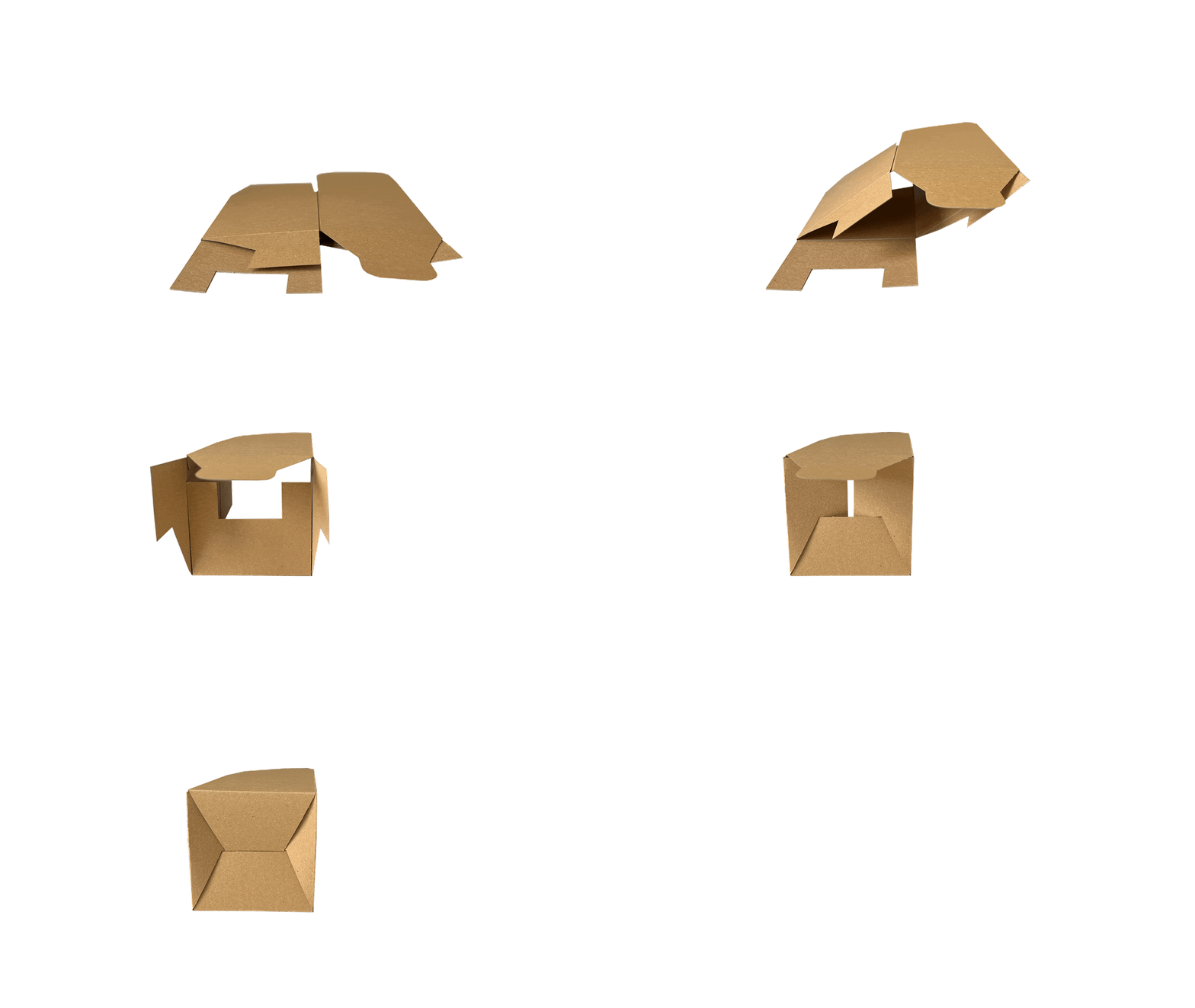
Snap lock base
The simple design and the option to reopen the box at any time to store the packaging flat are the two biggest advantages of the folding box with tuck-in base. No accessories are required to close the tuck-in base – unlike the tuck-in flap, the base consists of four differently shaped flaps that are simply tucked into each other to close the bottom of the folding box. The tuck-in base has a similar stability to the automatic base and is also cheaper due to the lack of adhesive points. Manual folding alone gives the automatic base a time advantage over a tuck-in base construction. From a weight of 500 grams, both the tuck-in base and the automatic base reach their limits – in this case, we recommend Cardboard Boxes.
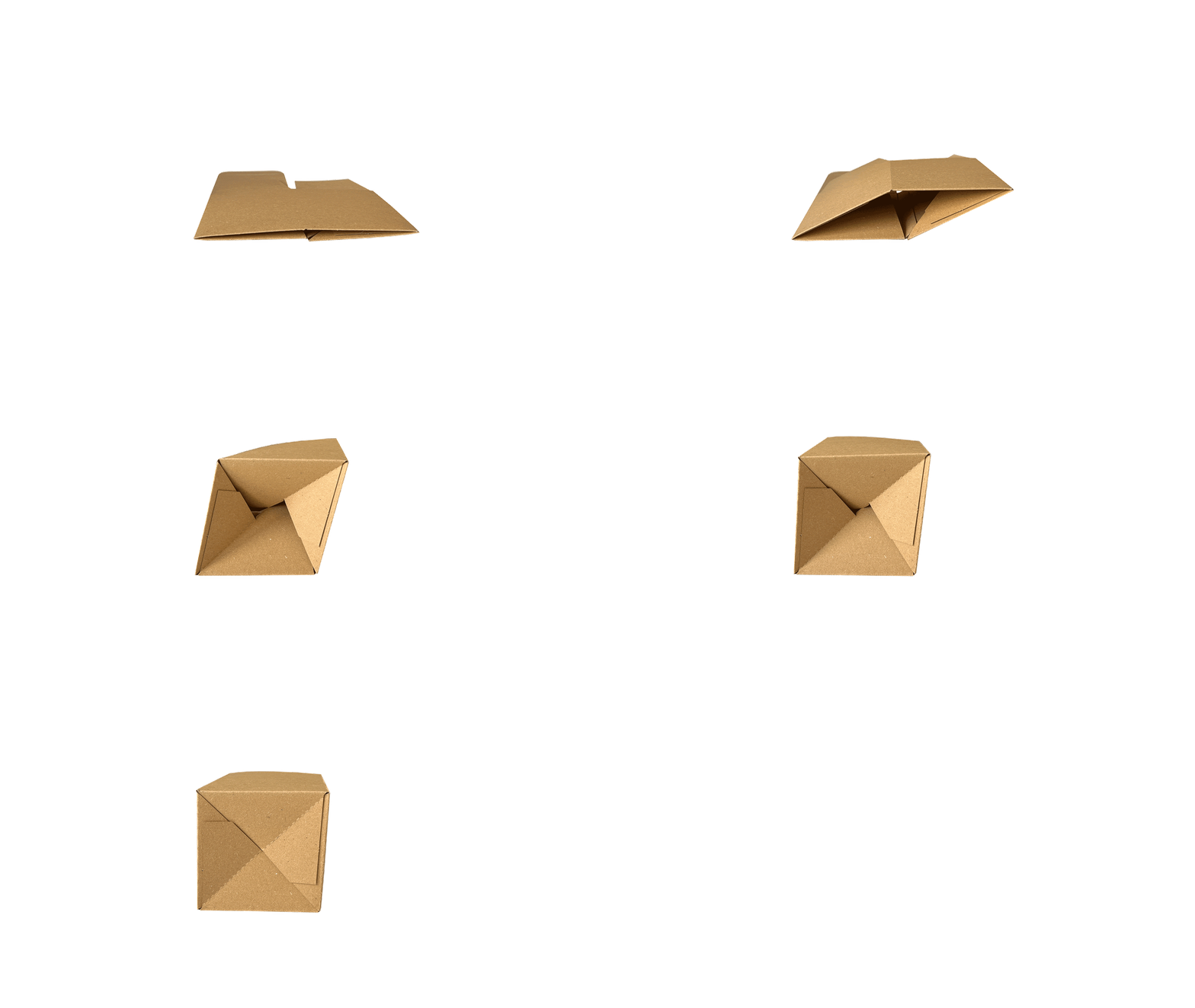
Crash lock base
The closure, also known as a flash bottom, allows the folding box to be set up in a single step. To do this, the side walls of the box only need to be pressed together slightly and the automatic bottom unfolds and closes the lower opening of the folding box. To achieve this, two bottom flaps are glued together and folded so that a closed and load-bearing bottom is created when the box is erected. The advantages are, on the one hand, the time saved by the quick assembly of the box, which also works with machine filling – on the other hand, the base is also suitable for heavy products and is therefore the most resilient of all three base types.
Info: Another type of box base is the flap closure. Here, the base flaps are not inserted into each other, but are automatically glued together with adhesive dots when the box is filled. This type of base is particularly popular in industries where jars or bottles are packed fully automatically, and also serves as a tamper-evident seal.
Assembly instructions for our folding box types
Each of our folding boxes has its own special features. With the right experience and a few clever tips, assembling the boxes is extremely easy. In the following videos, we show you how to effortlessly assemble folding boxes, folding box with hinged lid, counter displays and many other box variants.
Assembly instructions for folding box with tuck-in flap:
Assembly instructions for folding box with crash lock base:
Assembly instructions for Counter display with crash lock base:
Assembly instructions for pillow boxes:
Assembly instructions for folding box with hinged lid:
Assembly instructions for folding box with Euro hole:
Sample copy
Would you like to get a realistic overview of the numerous types of folding boxes and bases available? At packaging warehouse, you can order a sample box containing various types of folding boxes. The package includes a selection of printed folding boxes made from the different materials we offer. This allows you to get a precise impression of our portfolio – both visually and haptically. You will also receive a 5% voucher with every order.
Our sample box is a good choice for getting a first impression of our folding boxes and the quality of our production. However, if you would like to hold your original folding box in your hands before ordering, we recommend our sample service. You will receive your precisely manufactured folding box as an unprinted or printed sample – and you can order it directly via the calculator by setting the quantity to 1-10 pieces.
Lasse Harder CEO packaging warehouse
Sectors
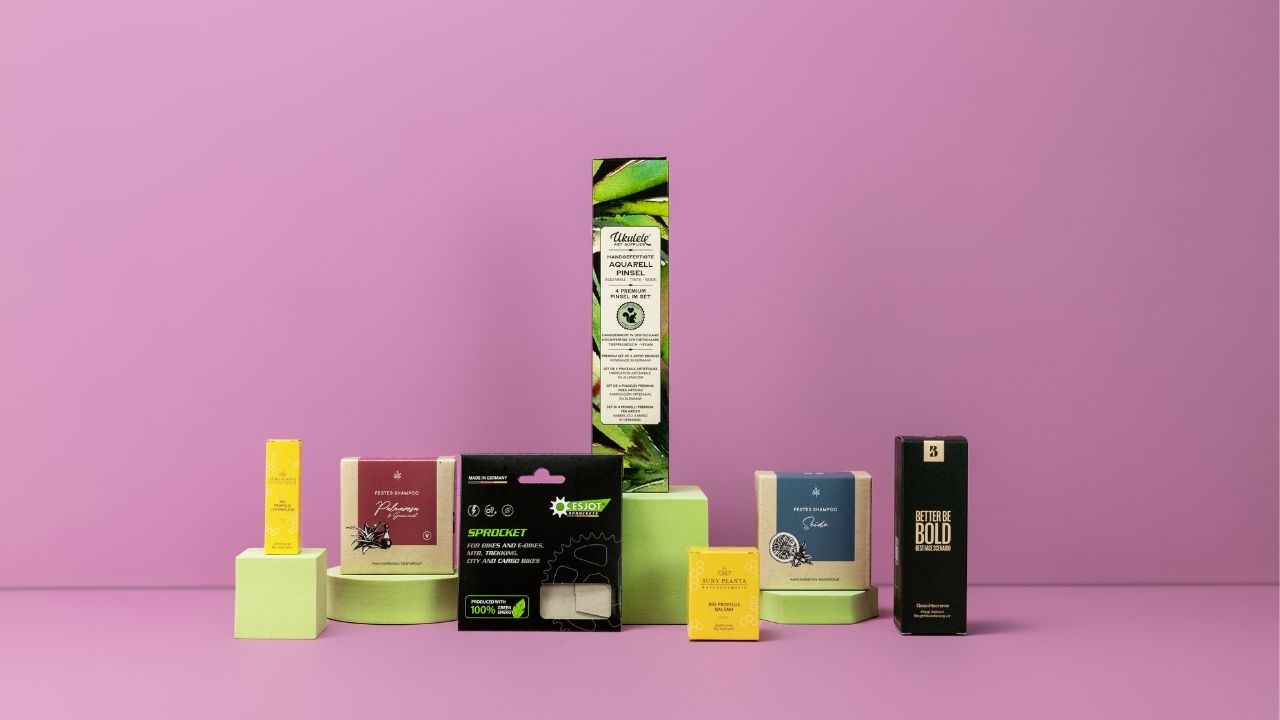
Thanks to the wide range of types, materials, formats and options available, folding boxes are ideal packaging for many industries – from the food industry and pharmaceutical sector to manufacturers of luxury goods. The range of applications is vast: from smaller cosmetic items, sweets, electronic components, promotional items and jewellery to larger products such as toys, textiles and household appliances.
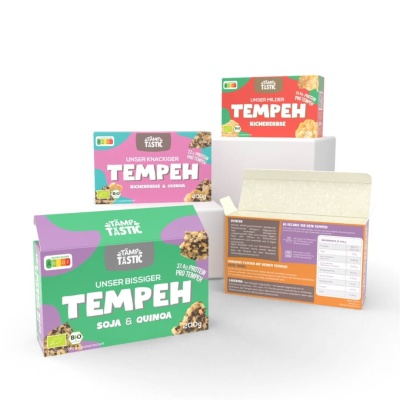
Food
Food packaging belongs to the group of food contact materials – this means that folding boxes used to package food must not release any substances that could compromise food safety. This naturally also includes protecting the packaged food from contamination or damage. Folding boxes for food also protect against harmful environmental influences such as light, oxygen or moisture – they also prevent microorganisms, changes in aroma and vitamin loss, as well as foreign odours.
In addition to these basic requirements, food packaging also has a decisive influence on purchasing decisions. In the food industry, too, packaging acts as an ambassador for the brand and must convince consumers with its design and quality, as well as containing all relevant food labelling information.
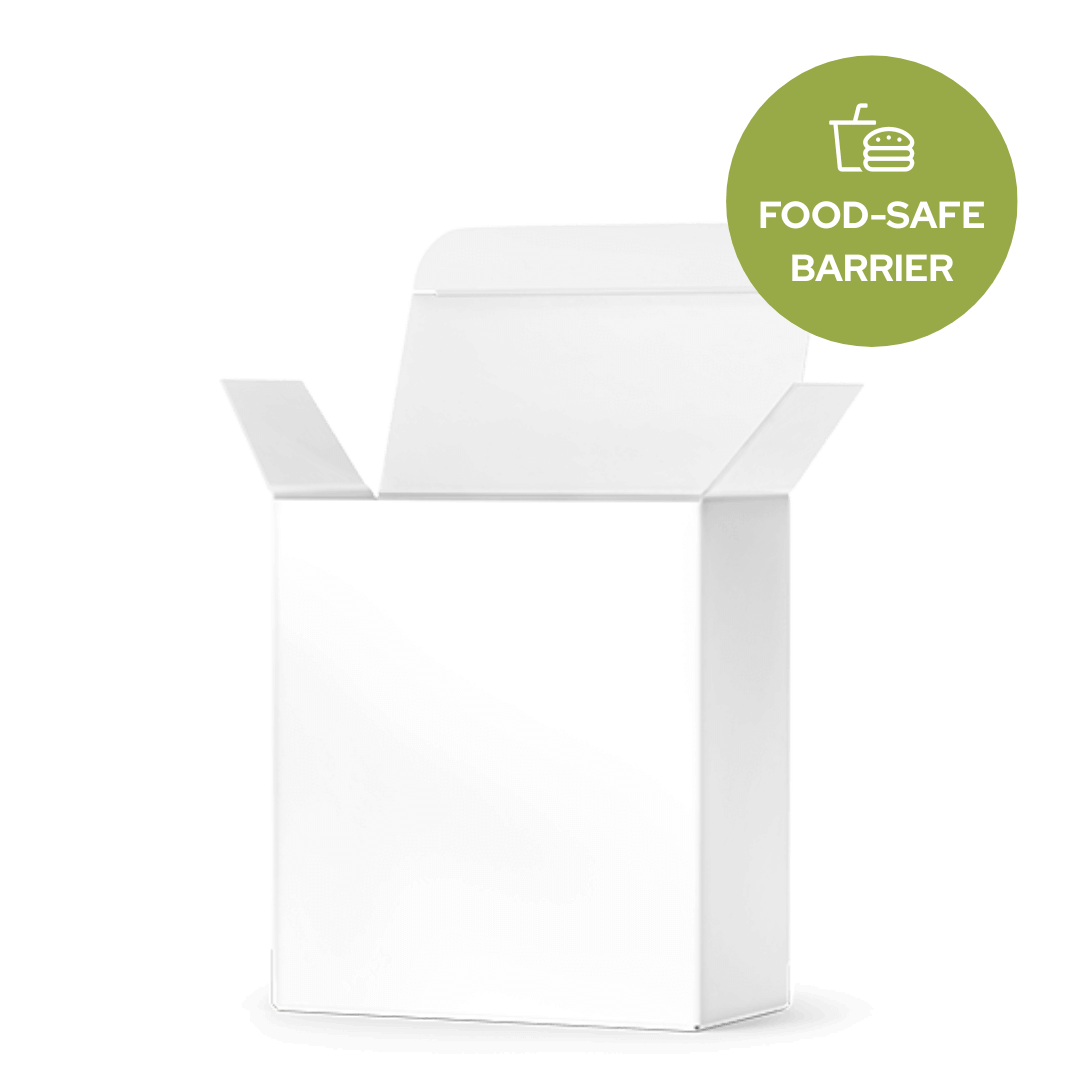
Food is often additionally sealed in foil before being placed in the box – however, the folding boxes from packaging warehouse are also suitable for direct food contact. For greasy products, we offer a food-safe inner laminate – this protective plastic layer prevents the box from being damaged or greased and, conversely, prevents external influences from reaching the food.
Info: Packaging for foodstuffs must be manufactured within the framework of documented quality assurance systems and in accordance with specified requirements – the general legal framework is laid down in EU Regulation 1935/2004. Certain materials, such as plastics, are also subject to extensive individual regulations governing the manufacturing process and permitted material composition.
Cosmetics
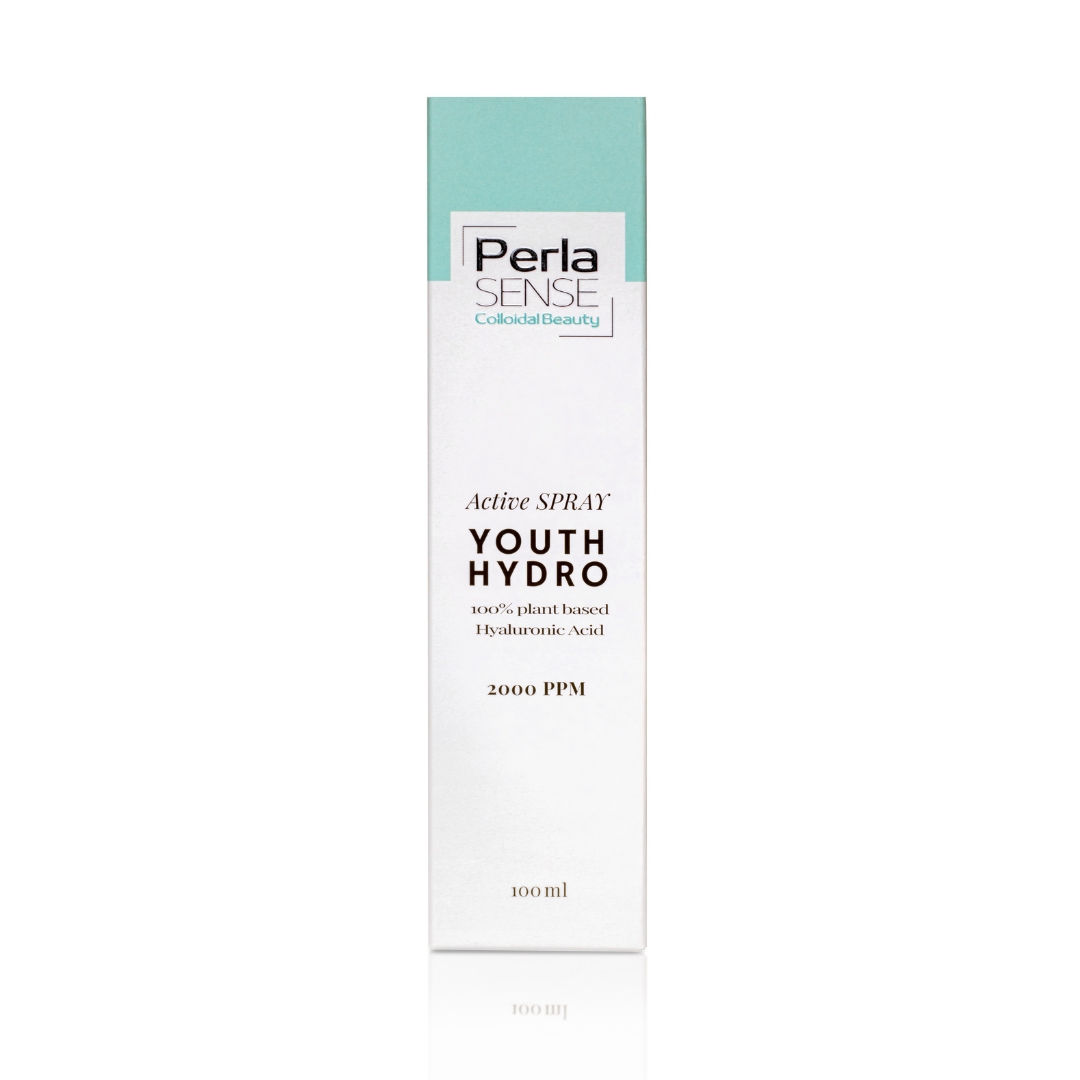
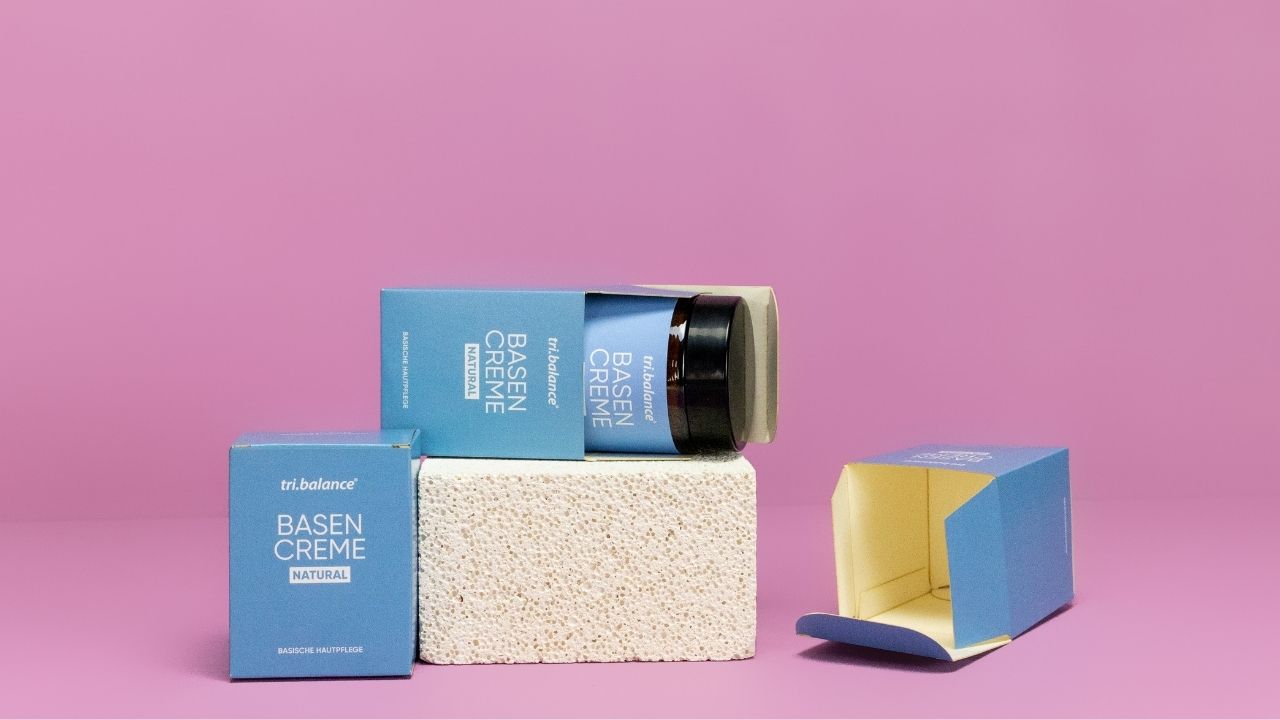
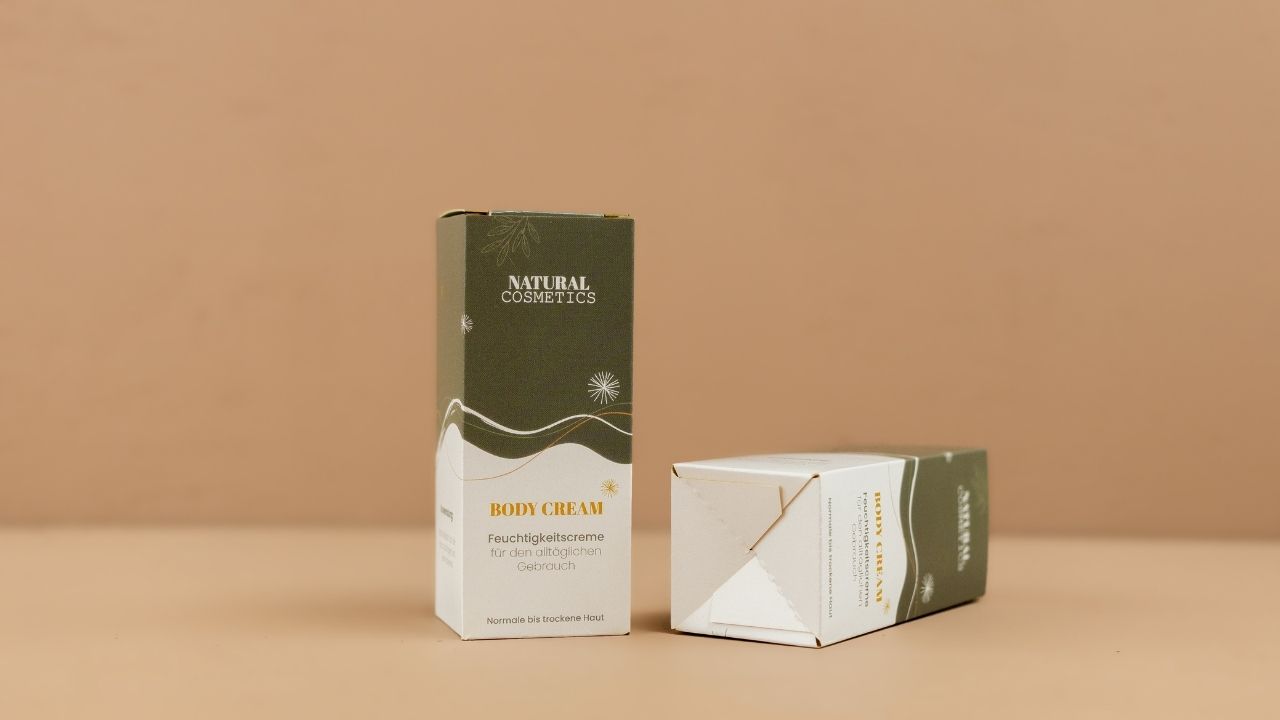
Folding boxes are primarily used in the cosmetics industry as secondary packaging for jars, tubes, bottles, nail polish, lotions, mascaras and many other cosmetic products. Similar to food packaging, all important information about the product must also be displayed on packaging for cosmetic items. This includes:
Intended use of the product
Inhaltsstoffe
Best-before date
Precautions for use
Batch number
Company and address
Country of origin
The impact of cosmetic packaging or folding cartons on consumers is naturally very important, because in addition to safety, aesthetics and brand communication are key characteristics of successful cosmetic packaging. As a marketing tool, cosmetic packaging can directly influence consumers and is indispensable for communicating with the target group. An impressive corporate design not only ensures customer loyalty and differentiation from the competition, but can also influence the success or failure of a product. However, product protection and stability as well as safe transport are also relevant for cosmetic products and an important task for folding boxes.
Many special designs are used in the cosmetics sector, such as our Folding box with separator for bottles or perfume or care sets. High-quality cardboard is mainly used in the cosmetics industry: with GZ cardboard in a heavy grammage of between 350-500 g/m², your product will also be a highlight at the POS! Lasse Harder CEO packaging warehouse
Pharmaceutical
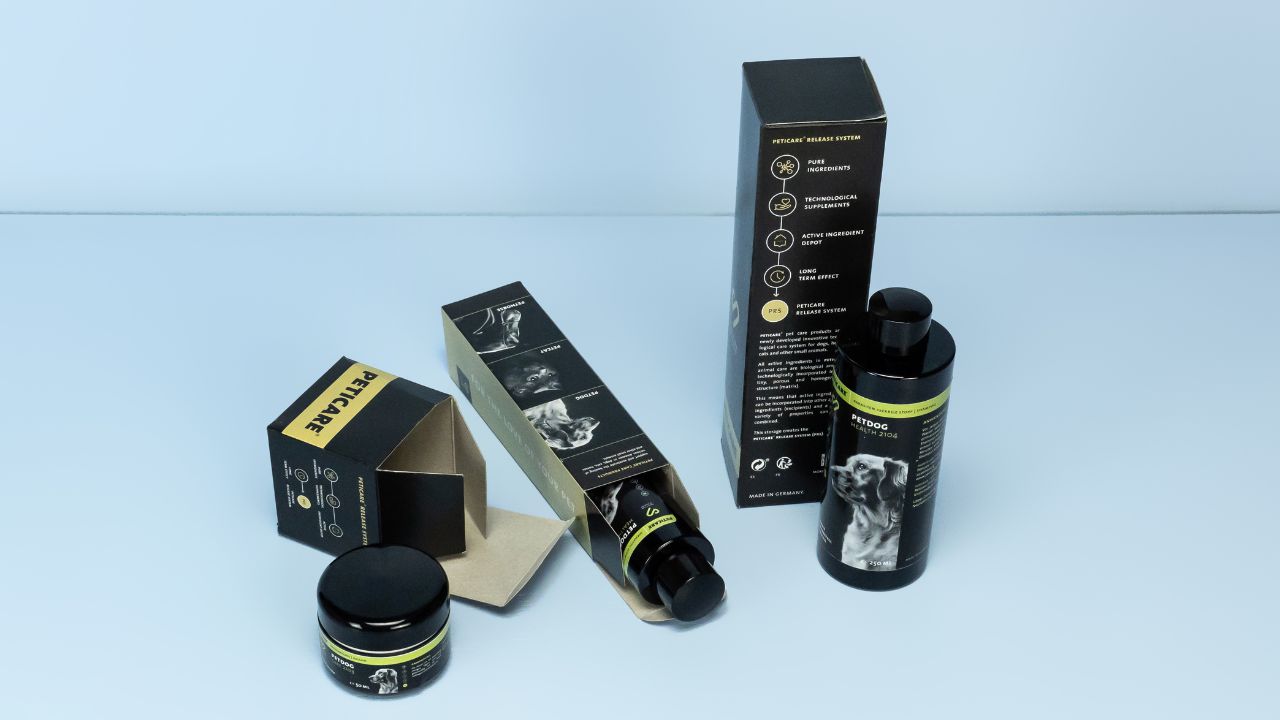
Folding cartons are used in the pharmaceutical, healthcare and CBD industries as secondary packaging for solid, liquid and semi-liquid medicines. They serve as packaging for ampoules, bottles, blister packs, jars and medical technology products and also contain product information (package inserts).
During production, manufacturers must comply with applicable GMP and FDA regulations and also take current quality and safety standards into account. Folding boxes for the pharmaceutical industry must meet high requirements in terms of whiteness, bending stiffness, thickness, creatability and codability in order to protect medical products from external influences such as moisture, dust particles and scratches.
The materials typically used are fresh fibre cardboard (GC) and cardboard made from secondary fibres (GD or GT) with grammages between 220 and 380 g/m², which reliably fulfil the tasks required. Production requirements for folding boxes for the pharmaceutical industry are also increasing:
Continuous optimisation of the transport function
Constantly increasing packaging output with smaller order sizes
Embossing of Braille
Compliance with presentation rules (‘blue box’ for centralised authorisations by the EMA)
Special colours for hazard warnings
Additional labelling and serialisation using adhesive labels, barcodes or 2D matrix codes
Printing with variable data within the packaging machine
Serialisation with adhesive labels, 2D matrix codes, barcodes
Marketing & Gifts
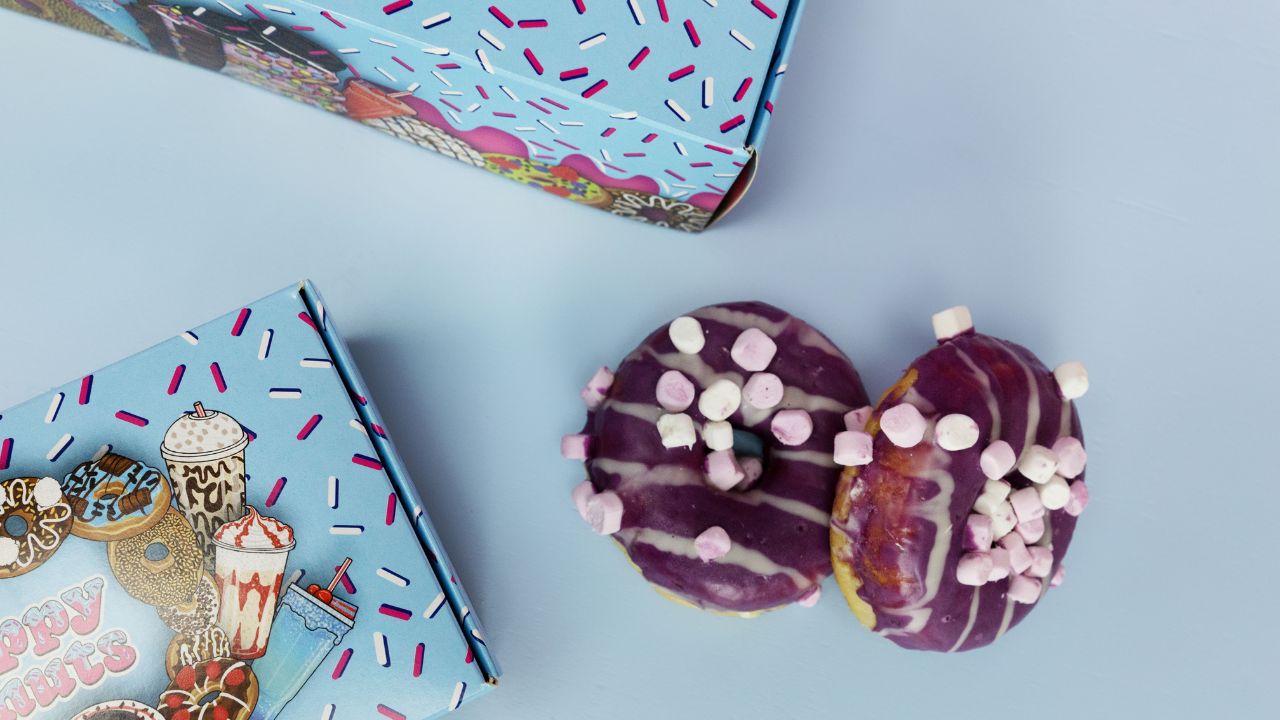
Whether as a marketing tool at trade fairs, a giveaway at major events, a promotional item in supermarkets or a gift box for holidays and birthdays, custom cardboard boxes are packaging that sticks in people's minds and, in the best case scenario, makes your brand or company even better known. A folding box with hinged lid in particular is perfect for marketing or gift packaging due to its versatility.
The possibilities are endless: carrying handle box with tuck-in flap for trade fair visitors, promotional boxes for advertising items, limited edition folding boxes with tuck-in flap for special promotions – if the packaging appeals to the customer's senses, the brand and products will also remain in their memory. Finishes such as a lacquered or laminated surface, 3D embossing or hot foil stamping in gold, silver and bronze can be helpful in attracting customers.
An attractive appearance is also important for folding boxes used as gift boxes – for birthday presents, boxes for wedding favours or gift packaging for Christmas, Easter or Valentine's Day.
The right gift packaging contributes to the overall visual experience and is ideal for cosmetics, perfumes, vouchers, wine bottles, jewellery or books. But folding boxes in their various types can also be used as tastefully designed photo boxes.
Automotive and electronics
Folding boxes are indispensable in the automotive accessories sector when it comes to packaging small to medium-sized spare parts. The boxes, designed in line with corporate identity guidelines, are used for many product groups, which can be divided into different sub-areas depending on their intended use. These include, among others:
Food
Windscreen wiper
Tools
Cleaning and care products
Spark plugs
Screws, nuts, washers
Here, too, you can configure the various cardboard materials, grammages and types of our folding boxes precisely to your requirements. For automotive parts, but also in the electronics sector, secure packaging and a good fit for the products in the box are essential. For this purpose, we recommend our custom-made inlays, which prevent slipping inside the packaging and can also be printed in the design of the folding box. Smaller electronic products are ideal for presentation in shops hanging in a folding box with Euro holes – other items benefit from a folding box with a viewing window. Here, too, you have complete freedom in terms of the design and selection of your folding box packaging.
Retail and sales
The retail sector stocks products from a wide variety of industries – and therefore also a large number of folding carton packaging solutions. DIY stores, chemists and supermarkets stock many different types of boxes, all designed to appeal to customers. This is because products have direct contact with customers at the point of sale and are intended to encourage them to buy and repurchase. The diverse ways in which folding boxes can be used in retail are illustrated by this overview of the product range of a chemist's:
Household: bin bags & freezer bags, tissues, washing-up and washing machine tablets, cleaning wipes
In retail, folding boxes are often used as secondary packaging, designed to encourage customers to buy thanks to their visual and tactile qualities and the information they provide. But their ease of storage and transport, as well as their stackability, also make folding boxes ideal for retail. The various shapes also allow for great flexibility in the presentation of goods in the shop – an appealing display of different gable boxes, a decorative tray full of pillow boxes or folding boxes with Euro holes hanging directly at the checkout make the goods more attractive and immediately catch the customer's eye.
If we classify our products according to specific industries, 20-30% of our orders cannot be directly assigned. For example, a construction company orders a folding box for a metre stick. The folding box is used for marketing purposes – yet the company remains a construction company. So we literally work ‘across industries’! Lasse Harder CEO packaging warehouse
Folding box materials
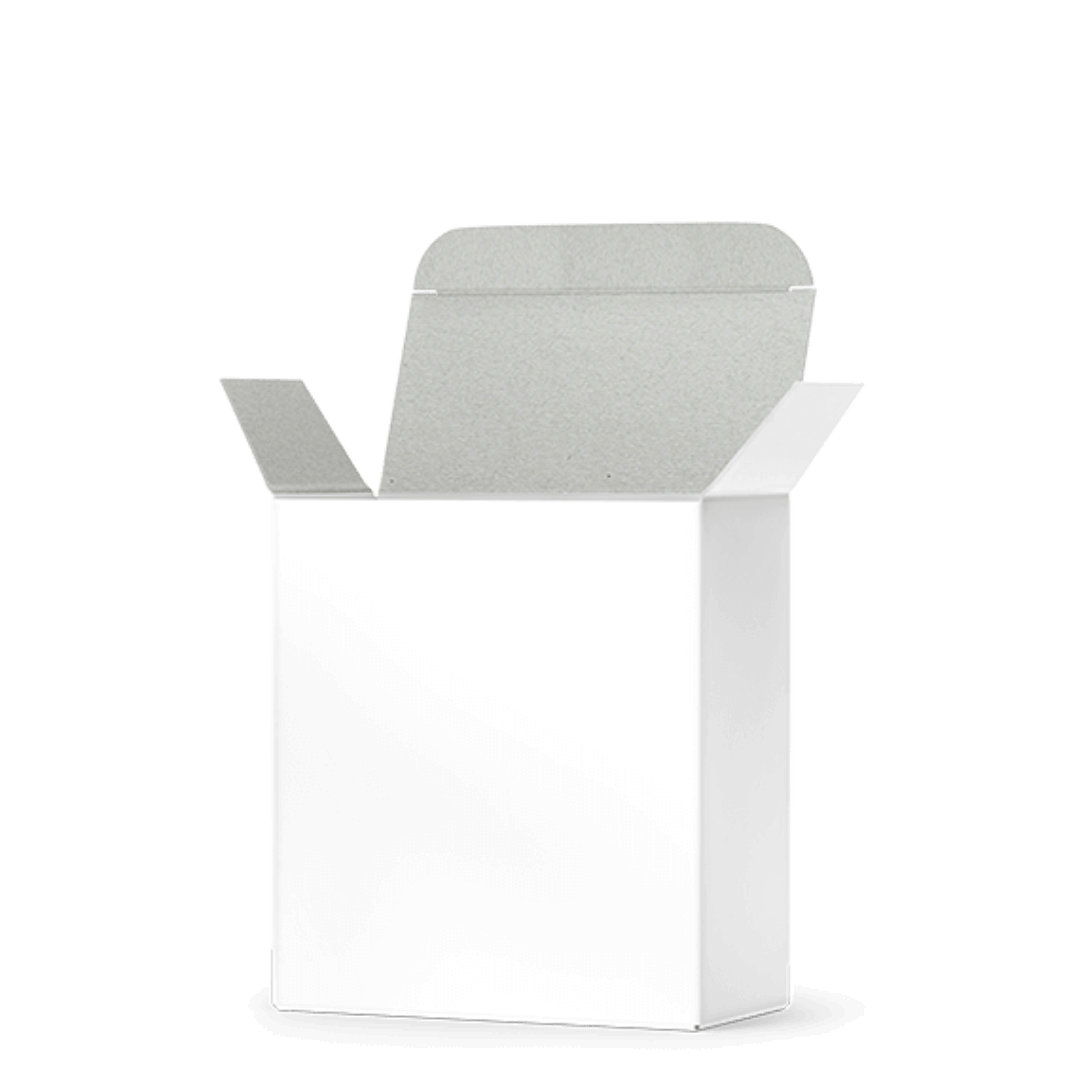
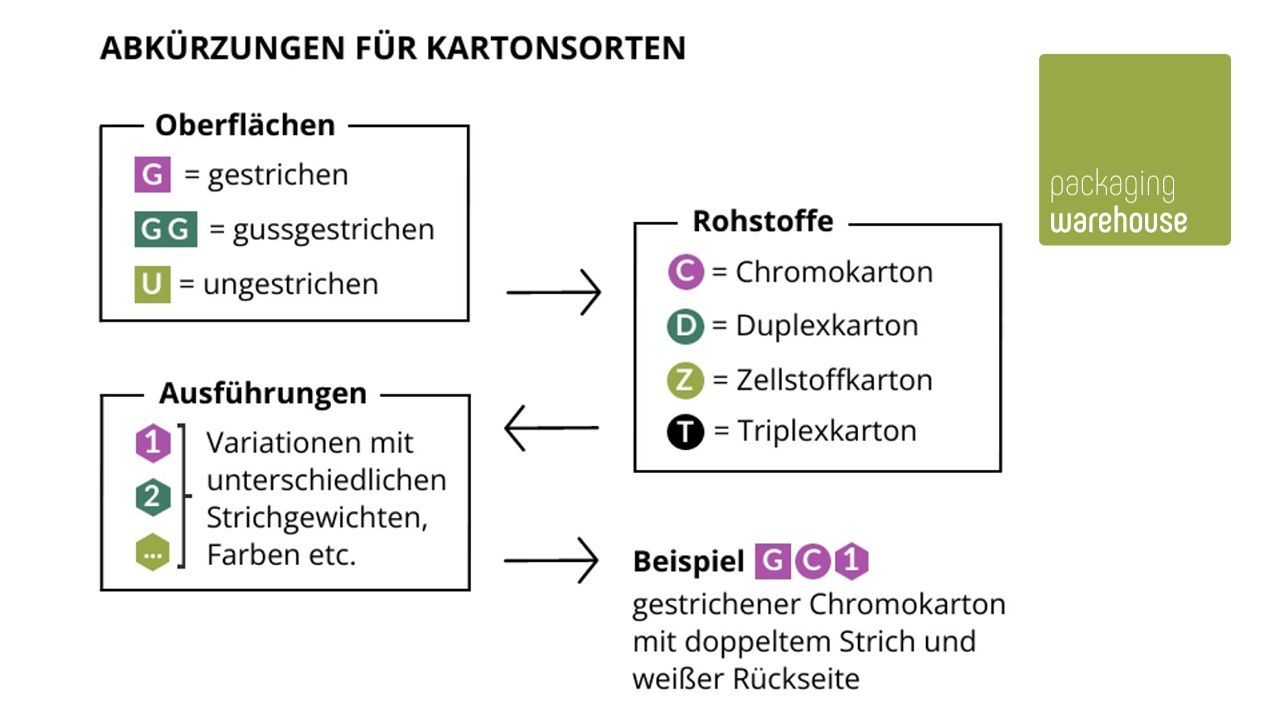
Folding boxes can be made from many different types of cardboard. The individual types of cardboard differ in colour, thickness, surface texture and the types of fibres used. To simplify communication between cardboard and folding box manufacturers, there are abbreviations for the different types, which encode important characteristics and consist of two capital letters and a number. The first letter stands for the surface
A: cast-coated
G: coated
U: uncoated
and the second letter for the fibre material used:
Z: bleached primary fibres (cellulose)
N: unbleached primary fibres (cellulose)
C: Primary fibres (wood pulp)
T: Secondary fibre, cardboard backing white, yellow or brown
D: Secondary fibre, grey cardboard backing.
The number after the letter combination indicates either the reverse colour (except for GD and UD)
1 white
2 birght (yellow)
4 brown
or indicates the specific volume (only for GD and UD):
1 > 1,45 cm³/g
2 1,3 – 1,45 cm³/g
3 < 1,3 cm³/g.
Further information on the types of cardboard and abbreviations can also be found in the ABC of our cardboard materials. At packaging warehouse, you can choose from seven types of cardboard:
Characteristic
Chrome cardboard (GC2)
Chrome cardboard (GC1)
Cellulose cardboard (GZ)
Recycled cardboard (GD2)
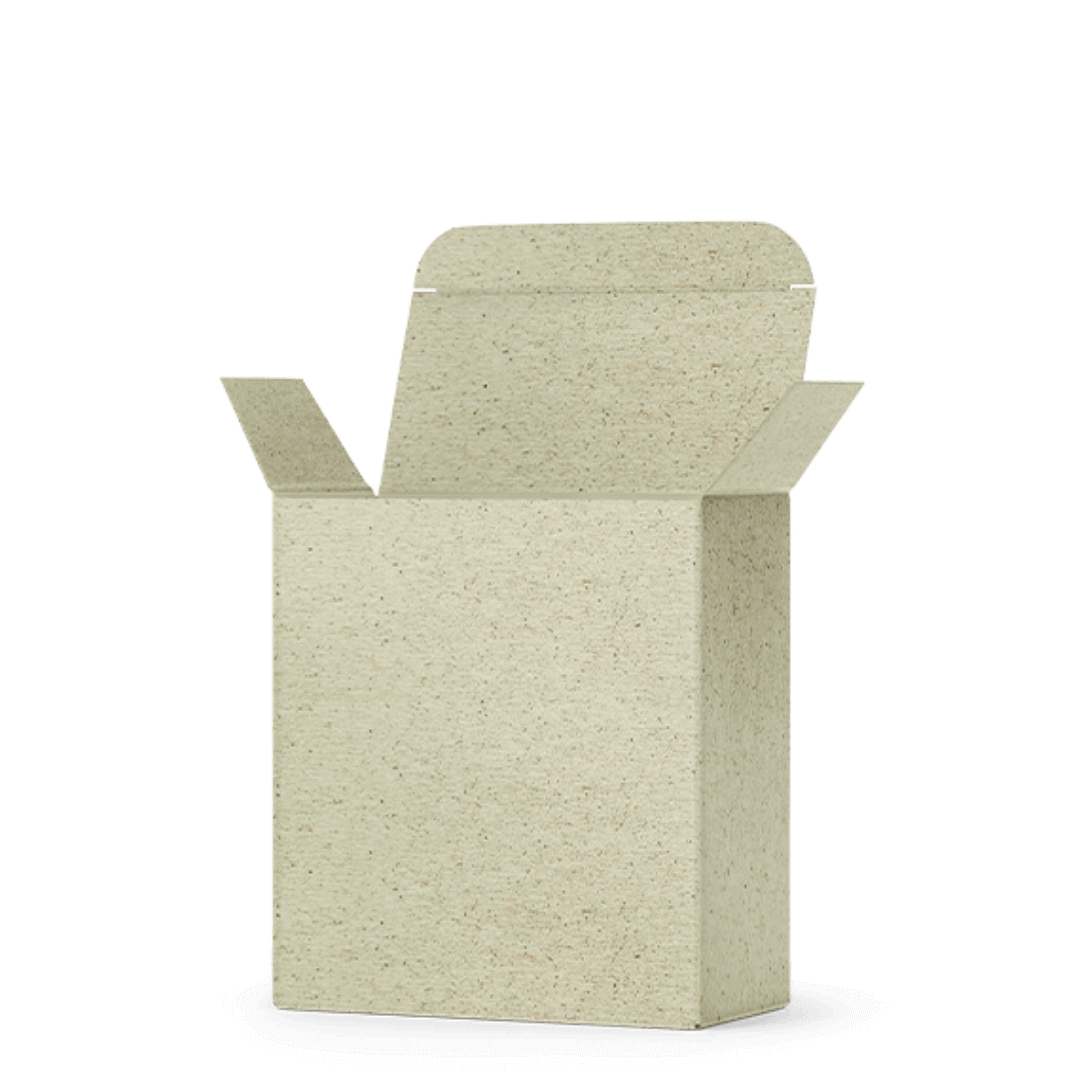
Grass cardboard
Natural cardboard
Grammage
280 g/m²
325 g/m²
450 g/m²
400 g/m²
325 g/m²
350 g/m²
Strength
0,52 mm
0,52 mm
0,52 mm
0,59 mm
0,52 mm
0,56 mm
Fibres
Primary fibres (wood pulp)
Primary fibres (wood pulp)
Bleached primary fibres (cellulose)
Secondary fibre
Secondary fibre / grass fibre
Secondary fibre / Primary fibres
Front
White
Smooth white
Smooth white
Smooth white
Natural optics grass
Brown rough
Back
Light beige
White rough
Smooth white
Grey rough
Natural optics grass
Brown rough
Sustainability
Environmentally friendly, sustainable
Environmentally friendly, sustainable
from sustainable forestry, recyclable, compostable
INFO: Would you like to learn more about our cardboard types, materials and their properties? Then we recommend our magazine articles on chrome cardboard and grass paper!
Folding box production
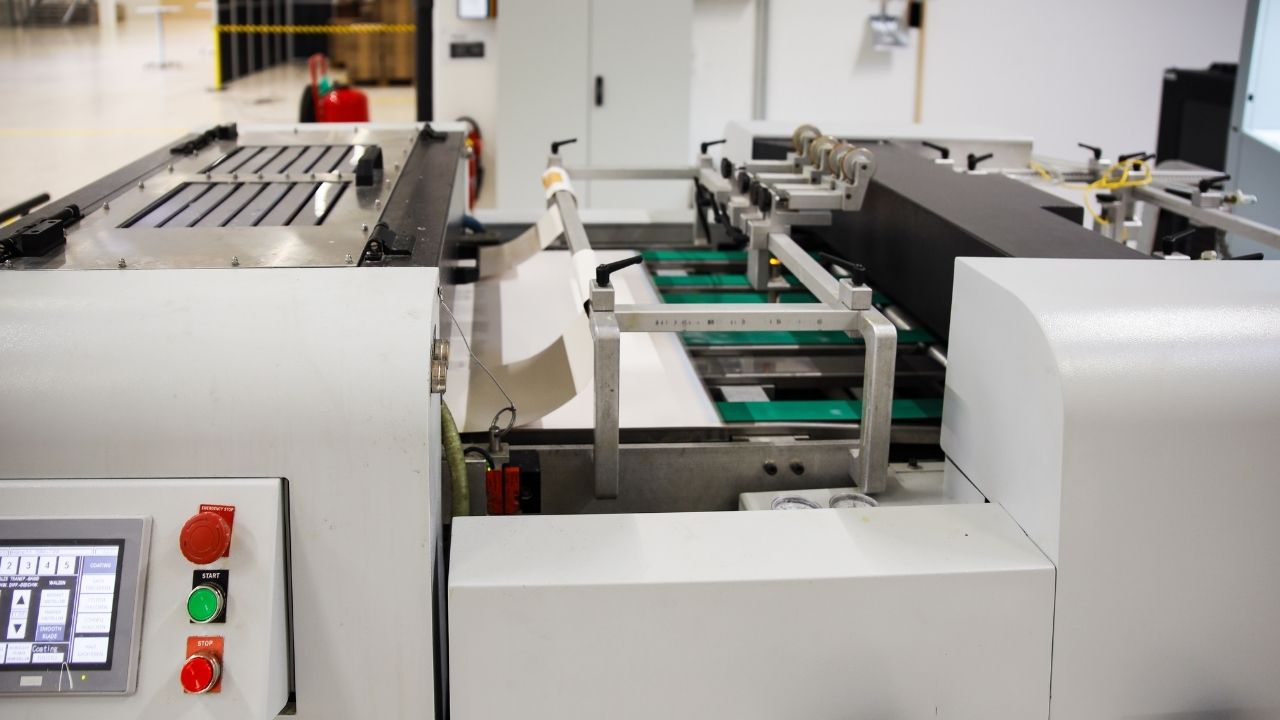
The manufacturing process for a folding carton consists of several production steps – the cardboard sheets are first printed, then die-cut, finished and finally glued. However, there are a number of options and variations in between that have a corresponding influence on the finished product.
Printing process
When printing folding boxes, packaging warehouse uses two printing processes – digital printing and offset printing. The decisive factor here is not quality, but cost-effectiveness. Digital printing is a non-impact process (NIP) that does not require printing plates and is particularly suitable for small and medium print runs. Offset printing requires printing plates, but delivers very good print quality in a very short time, making it the more economical printing option for large print runs.
After printing, the so-called finishing process takes place – this term covers various processes that make the surface of the cardboard sheet more visually appealing, but also more resistant.
Paintwork
Varnishes form a smooth and dense film on the printed surface, which can have decorative and functional properties.
Protective coating – A protective coating that protects the surface from wear and tear and dirt.
Gloss and matt finishes – finishes specialising in gloss and matt effects.
Effect paint/3D paint – Pigments (bronze, aluminium) are mixed in to create a special effect paint. Different layer thicknesses can also be used to create surface reliefs, including Braille.
Recesses/spot varnishing
Hot foil stamping
Hot foil stamping is used on folding cartons to create smooth and shiny surface elements in gold, silver and other metallic colours. The effect is created by a very thin film of varnish, which is metallised on one side or coated with a thin layer of colour. The term hot foil stamping derives from the use of a thin PET film onto which successive layers are applied:
Separating layer – separates film and paint / extremely thin
Protective lacquer – lacquer film / Protects the metallisation
Adhesive layer – hot melt / bonds varnish and metallisation to the cardboard
The foil is stretched over the cardboard at a slight distance and then embossed with pressure and heat using a heated tool. The heat activates the adhesive layer, causing the metallised lacquer film to adhere to the cardboard surface – but only in the heated area. This means that only the embossed motif remains visible on the sheet when the stamp is removed and the foil tightens again. Hot foil embossing not only allows for smooth and shiny elements – relief embossing and holograms can also be created using this method.
Punching & creasing
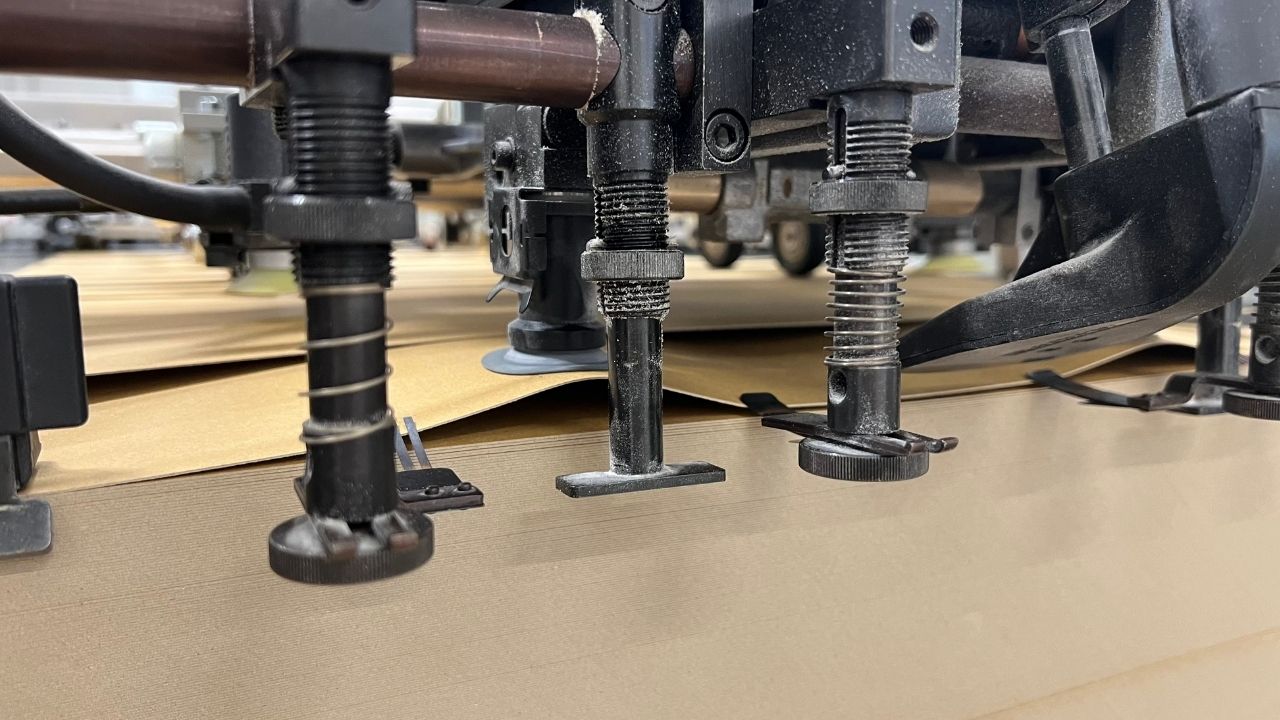
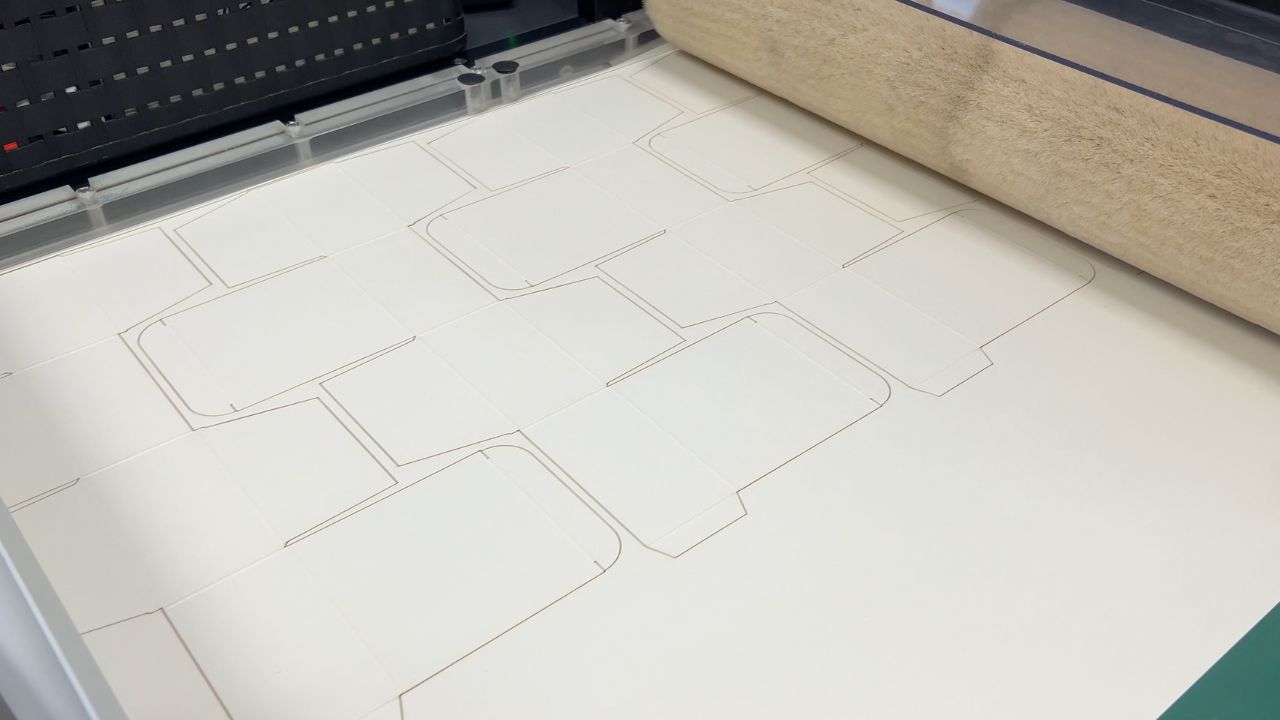
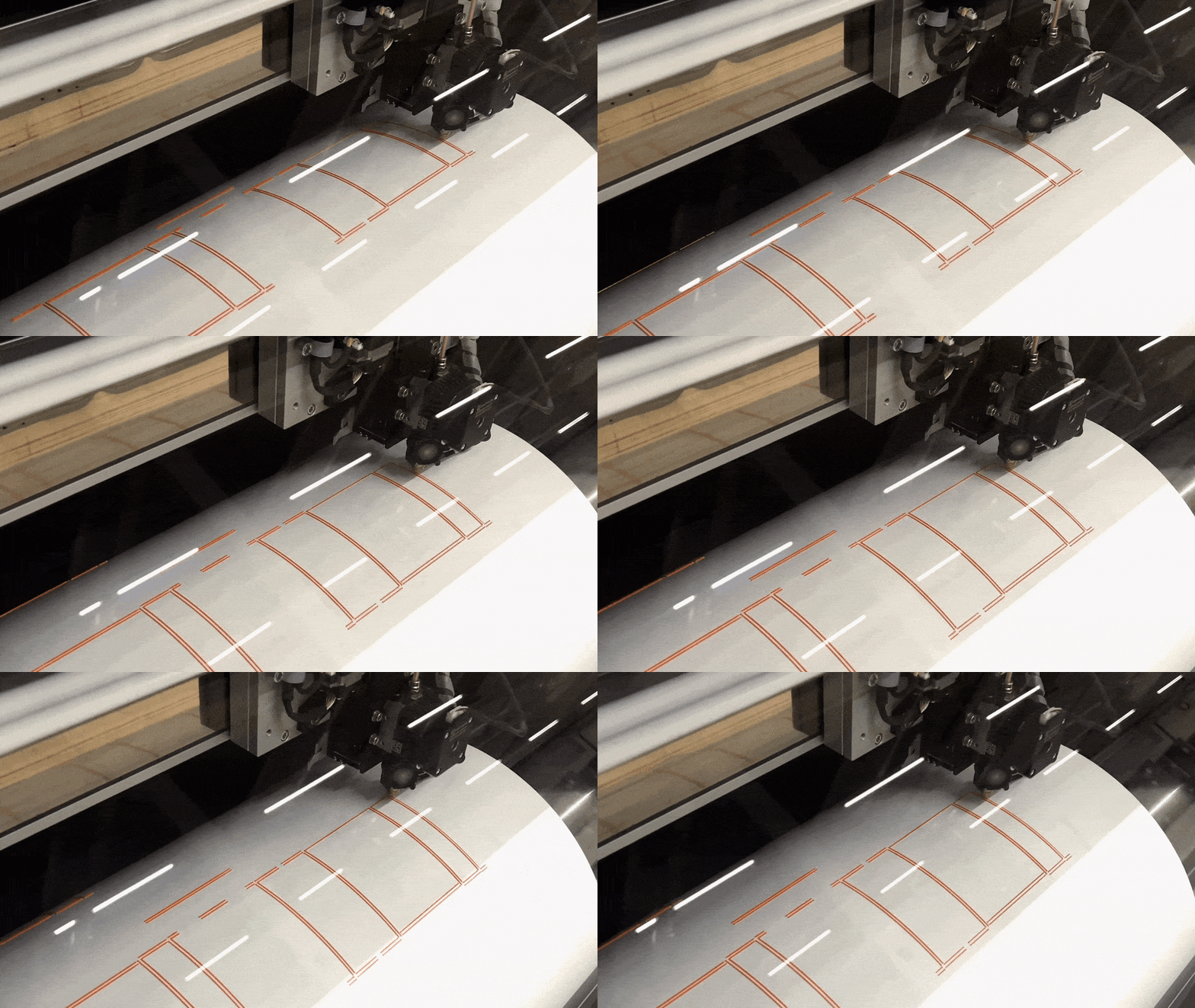
After printing and finishing the cardboard sheet, it is die-cut – in this process, the cardboard sheets are separated into individual blanks in the automatic die-cutting machine. Creasing along the future fold lines and other processes such as embossing or scoring are also carried out in this step. Packaging Warehouse uses two different methods for die-cutting the sheet – laser die-cutting and conventional die-cutting:
Laser punch
Laser cutting of the workpiece is further divided into two types of production. With laser cutting, both the contour and the fold line are cut out with the laser. Conventional laser punching only cuts out the contour of the folding box with the laser – the creasing is created using special mats that are printed with the creasing pattern in a 3D printer. These mats are then placed in the laser punch during the process.
Conventional punch
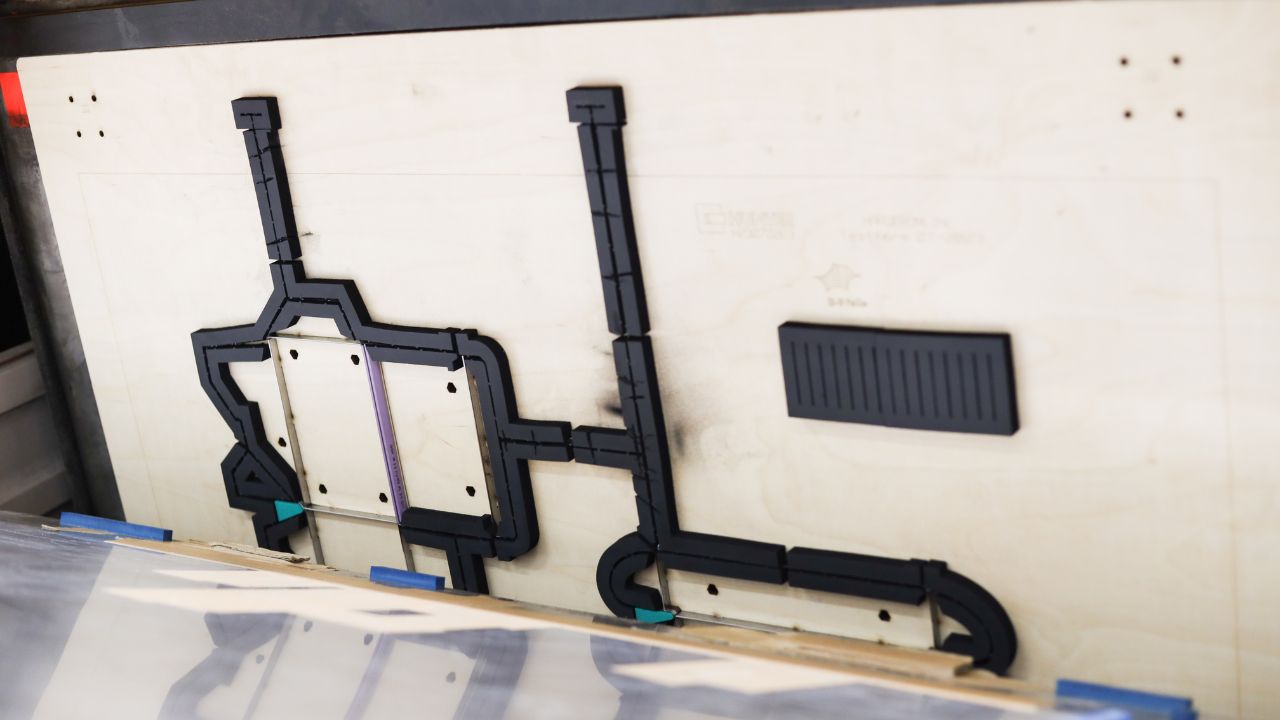
Conventional die cutting uses a steel strip cutting tool. This is a wooden plate with cutting blades, creasing lines and ejector rubbers, which moves up and down in the machine to cut the contour out of the sheet. This type of die cutting is worthwhile for medium print runs, with the cost of the die cutting template ranging from £150 to £1,000, depending on the size, number of uses and complexity, e.g. due to a logo embossing.
INFO: Conventional laser cutting gives you the look of classic creasing, with the price advantage of laser cutting – even if you have to budget an additional £60-80 for fabric and 3D printing.
Grooves
As the name suggests, it is only through folding that a punched cardboard sheet becomes a folding box. It is essential to crease the cardboard along the fold line – this is the only way to prevent tears in the upper layers of the material. Ideally, this creates clearly defined fold lines that simplify the folding process and thus form the basis for the shape and functionality of the folding box. The process is similar to embossing: with the aid of a thin steel strip (the creasing knife) and a precise groove (the creasing die), a permanent crease is pressed into the cardboard during die-cutting. This fold line then serves as a kind of hinge during folding – the cardboard is weakened at this point and can be folded into the desired shape due to the low bending resistance. Depending on the type of cardboard, the creasing tools must be adjusted to achieve optimal results.
Gluing
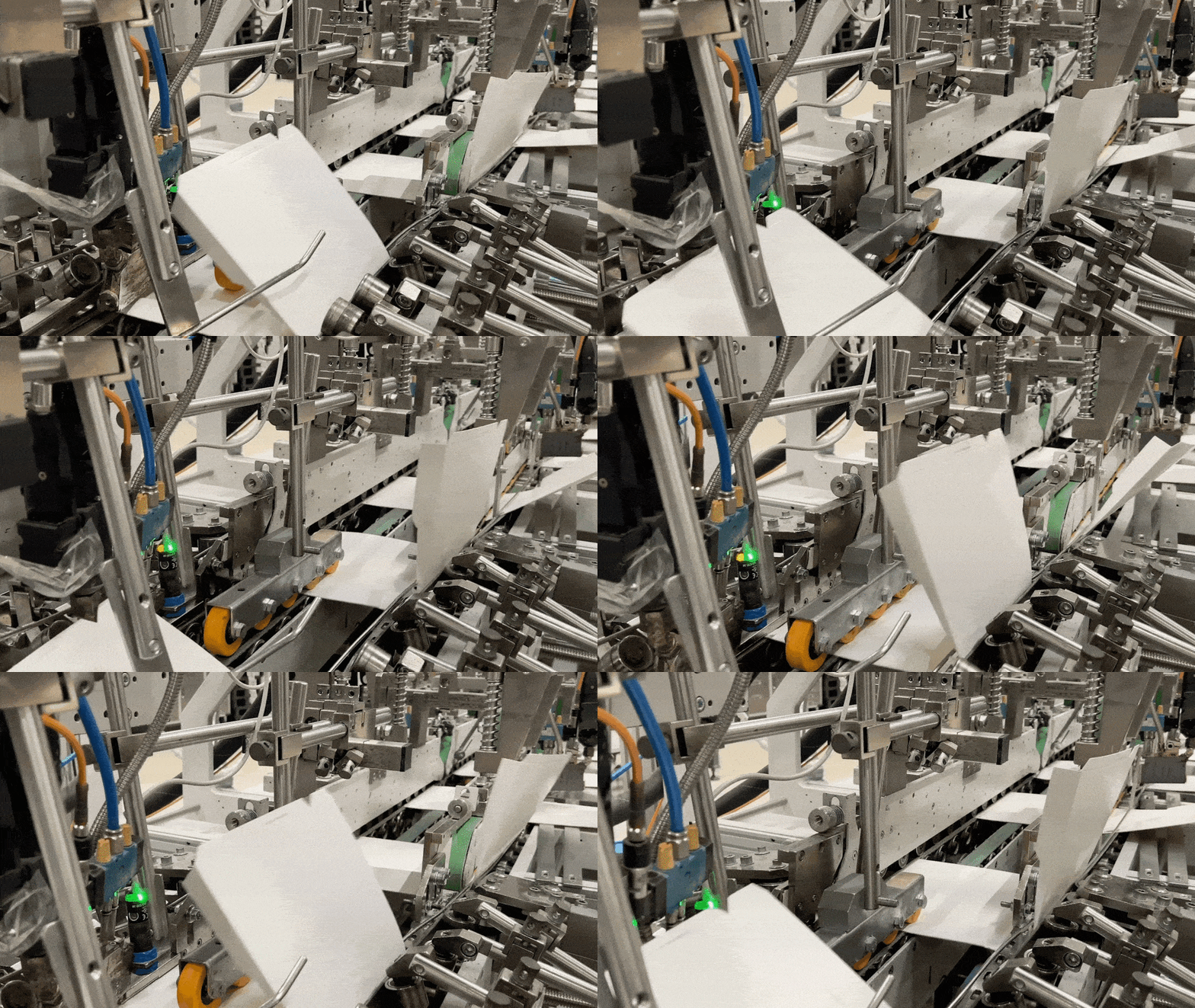
After punching, the folding boxes are broken out of the sheet in their final form and placed in the gluing machine. In this step, the blanks are glued at the adhesive edge – the machine applies the glue, folds the box along the fold lines and presses it together at the joint until the glue has hardened. Depending on the size of the folding box, the material and the surface coating, either cold glue or hot glue is used to glue the box, with hot glue being more durable. Sometimes the gluing points are also milled in the gluing machine to roughen the surface slightly and thus improve the adhesive properties of the glue.
The number of adhesive dots also varies depending on the type of folding box: a standard folding box with tuck-in flaps, for example, has one adhesive dot, while a box with an automatic base has three adhesive dots. At packaging warehouse, we can apply up to four adhesive dots.
The gluing process completes the chain of operations that transforms a sheet of cardboard into a functional and visually appealing folding box. The final steps are packing and shipping the flat folding boxes until they reach the customer, where they can be filled and used for one of their many purposes.
Depending on the type of further processing – whether by hand or machine – we can also supply your folding box with a ‘pre-broken crease’. This ensures that the folding box can be set up more easily during machine assembly. As a rule, two creases are pre-broken when gluing the folding box – this means that two outer edges of the box are folded so that it can be delivered flat. When the third crease is folded in the gluing machine, it is also pre-broken, leaving only a single crease unbroken. By folding and refolding the folding box beforehand, it runs smoothly through the assembly machine, which is particularly important for high cycle rates.
Lasse Harder CEO packaging warehouse
Sustainability
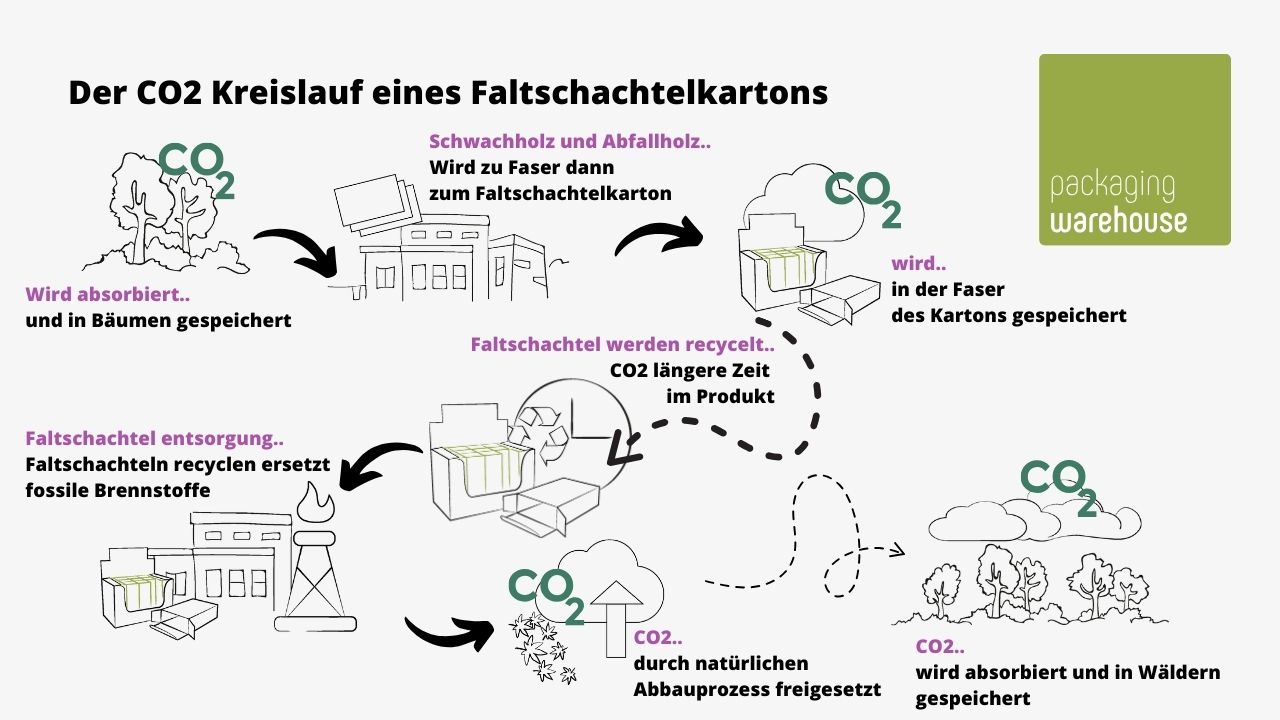
As packaging made from renewable raw materials and easily recyclable, folding boxes are also seen as sustainable packaging by consumers of all ages and are preferred when making purchases. The obvious advantages are that the cardboard is made from renewable raw materials – wood fibres and cellulose or recycled waste paper – and that the paper fibres are highly recyclable, as they can be reused 5-7 times.
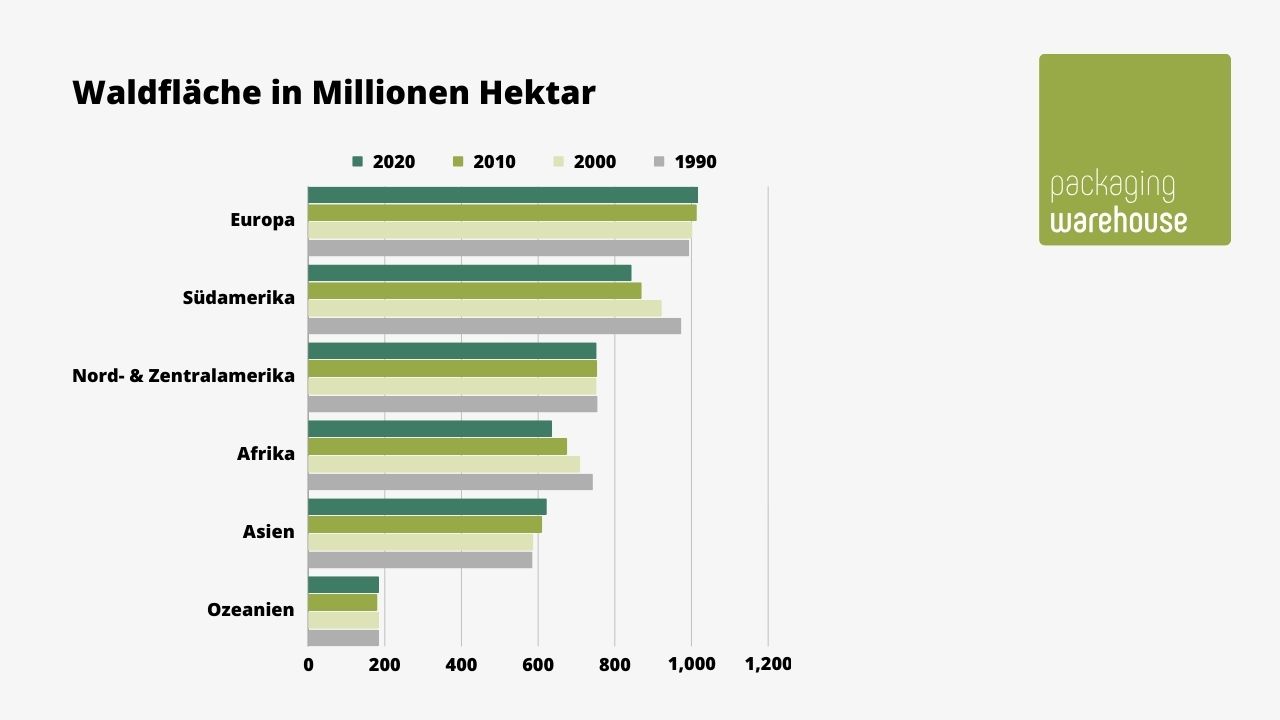
Similar to the production of corrugated cardboard, broken and thinned wood, sawmill by-products and plantation wood are primarily used for the production of fresh fibres in Europe. Thanks to the sustainable management of European forests, their area has grown continuously since the early 1990s.
In addition, the European pulp, paper and cardboard industry obtains more than half of its energy from biomass derived from biological, mostly plant-based material – thus, wood by-products generate renewable energy for production. To compensate for high water consumption, 95% of the water is purified and reused. The electricity for production (almost 97%) is supplied by combined heat and power (CHP) plants, in which over 90% of European factories have already invested. This means that production is not only resource-efficient, but also gives our cardboard boxes a positive carbon footprint.
When it comes to sustainability and folding boxes, the question of the recyclability of coated paper packaging often arises. Compared to pure fibre-based packaging, the amount of composite materials in waste paper is very low. Furthermore, paper composites can be recycled in standard recycling plants and the fibres can also be reused. It is important that folding boxes are also fed into the recycling cycle, whereby uniform labelling of packaging with regard to correct disposal would be helpful for consumers. There is also room for innovation in the area of processing and sorting in order to enable the best possible and single-type recycling of composite packaging.
INFO: Similar to the recycling of composite materials made of cardboard and film, printing inks also play an important role in the successful recycling of cardboard and paperboard packaging.
 5 Stars

























.gif "Hot foil stamping on a folding box")


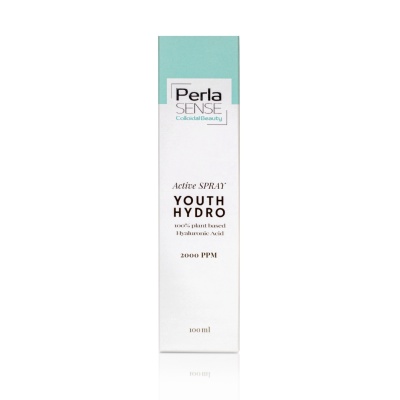 Folding boxes
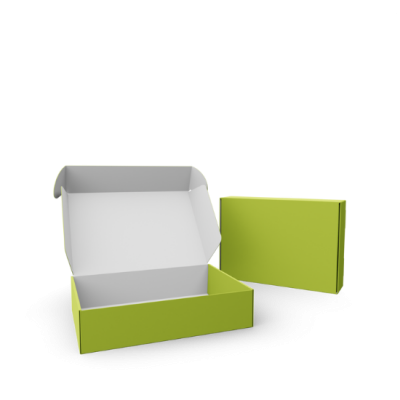




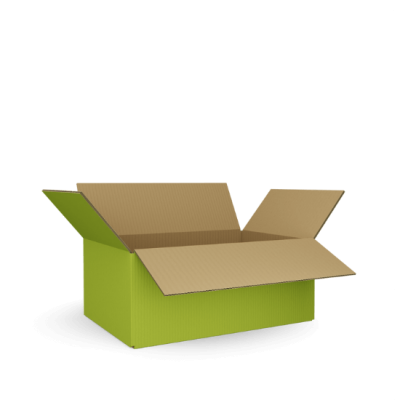
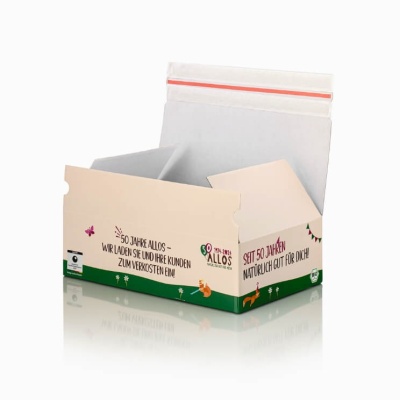 Shipping boxes



 Stand-up pouch


.png) Roll labels
Roll labels 


 Paper cans
  Sample boxes
.png)
.png)
.png)