

 Folding boxes





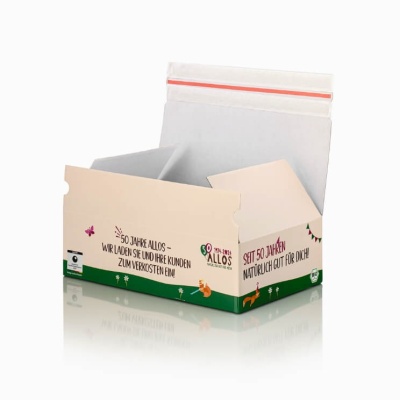 Shipping boxes





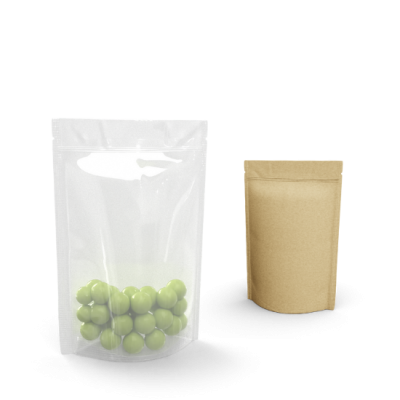
 Stand-up pouch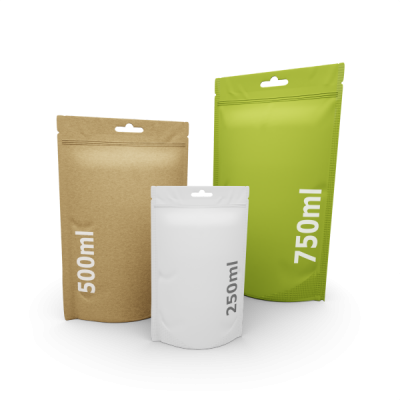



.png) Roll labels
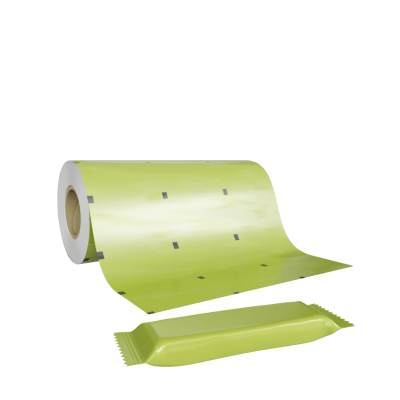
Roll labels 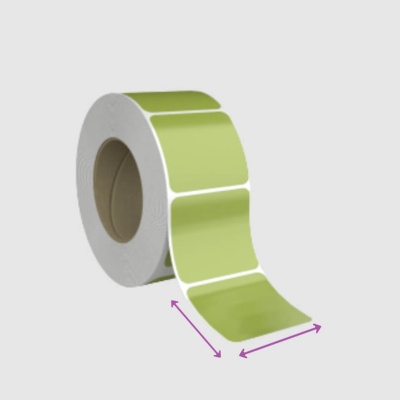


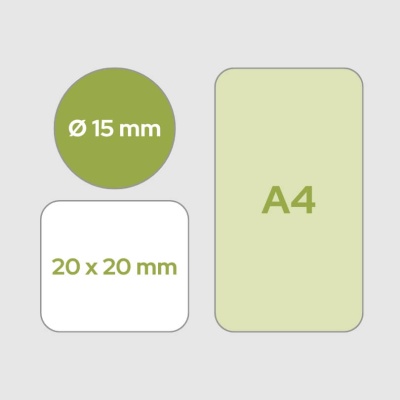


 Paper cans
  Sample boxes
 When describing folding boxboard, various abbreviations are used to standardise the structure and various properties and make them generally understandable. In accordance with DIN 19303 (11/03), the abbreviations usually consist of one to three letters and a number. The letters describe the surface and the material used. The number describes the colour of the reverse side or the specific volume (only for GD & UD). The main types of cardboard are primary fibre cardboard (fresh fibre cardboard), secondary fibre cardboard (recycled cardboard) and cast-coated cardboard.
How is a carton designation structured?
Folding boxboard consists of several layers, which determine the properties of the cardboard. The following components/layers are used in the cardboard abbreviations:
- Letter 1: The surface of folding boxboard can be coated (G), cast-coated (A) or uncoated (U). A coated surface offers a smooth, even texture and is therefore ideal for high-quality printing applications or finishes. Uncoated surfaces, on the other hand, have a natural and rough surface texture, which is particularly suitable for packaging where a more sustainable and rustic look is desired.
- Letter 2: The raw materials used for the cardboard influence its appearance, bending stiffness, grammage, thickness and sustainability factors. The most common raw materials include chromo board/primary fibres (C), duplex board/secondary fibres (D), pulp board/bleached primary fibres (Z), unbleached primary fibres (N) and triplex board/secondary fibres (T). Each of these base materials has individual properties and is suitable for different applications and requirements.
- Number: The number attached always describes the colour of the cardboard backing. The number 1 means ‘white’, the number 2 means ‘light (yellow)’ and the number 4 means ‘brown’. Only for GD and UD cardboard is the last digit used to describe the specific volume. Thus, the number 1 means ‘> 1.45 cm³/g’, the number 2 means ‘1.3 – 1.45 cm³/g’ and the number 3 means ‘< 1.3 cm³/g’.